Agriculture · Investigation
In 1997, T&T rejected these seed rules to protect farmers. In 2026, it is adopting them. What changed?
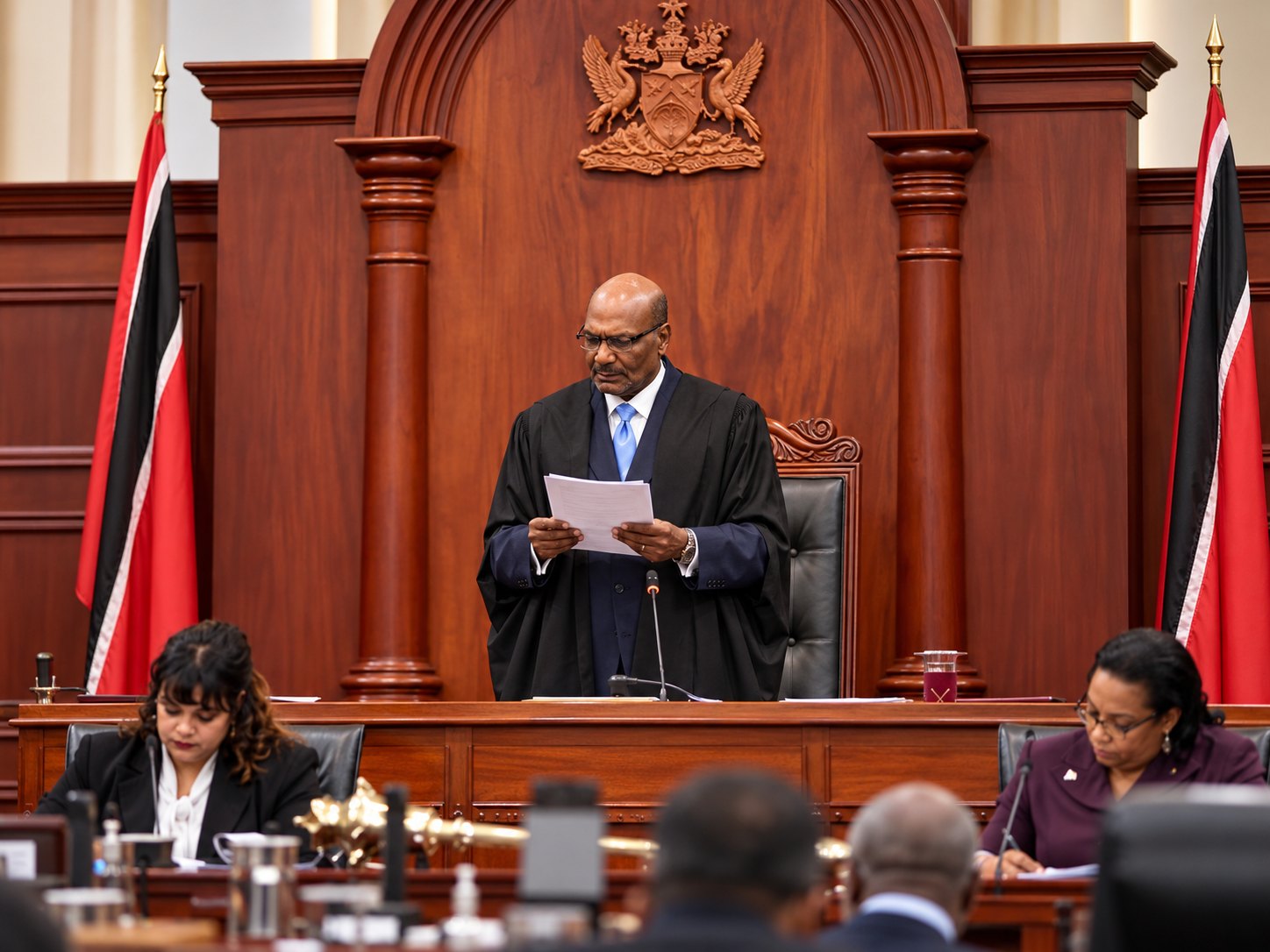
In 1997 the Government told the Senate that UPOV 1991 “erodes the farmers’ privilege” and chose the older convention. The same regime is now being adopted.
Trinidad and Tobago is preparing to make a significant change to the law governing seeds, plant varieties and who controls the right to reproduce them. The Protection of New Plant Varieties (Amendment) Bill, 2026 would move the country from the older UPOV 1978 framework towards the substantially expanded protections contained in UPOV 1991. The Bill was introduced and passed in the Senate on September 18 without amendment. It would extend plant-variety protection to all plant species, broaden the definition of who may qualify as a breeder, increase the activities requiring a breeder’s prior authorisation and extend protection generally to 20 years and to 25 years for trees and vines. Parliament itself describes the Bill’s purpose as bringing Trinidad and Tobago’s law into conformity with UPOV 1991 and facilitating the country’s accession to that convention.1
Put that into ordinary language and the issue becomes much easier to understand. A farmer can buy and physically own a protected seed without acquiring an unrestricted legal right to reproduce what is inside that seed. Under the amended section 15, the breeder’s rights extend to propagating material and cover acts for which prior authorisation is required.1 The Government explained in the Senate that the amendments increase the number of controlled acts and extend protection beyond propagating material in certain circumstances to harvested material and products obtained through unauthorised use.2 The law is therefore making an important distinction between possession of a physical seed and ownership of the intellectual-property rights attached to the protected variety that seed reproduces.
Graphic 1 · What it means to own a protected seed
You bought the seed. What can you actually do with it?
You own the physical seed you purchased.1
Physical ownership of the seed
≠
Unrestricted intellectual-property rights over its reproduction
That matters enormously in agriculture because seeds reproduce. A farmer can buy seed, plant it, tend the crop, fertilise it, irrigate it and harvest another generation of seed. Saving part of one crop for the next planting is one of the oldest agricultural practices there is. The 2026 Bill does preserve a farmer exception, but it is not unlimited. It says farmers may, “within reasonable limits” and subject to safeguarding the breeder’s legitimate interests, use the product of their harvest for propagation on their own holdings.1 The Bill therefore does not simply say that a farmer who grew the crop owns an unrestricted right to reproduce, exchange or commercially distribute its seed. Instead, it establishes a breeder’s right and then creates a qualified exception within it for farmers. Independent Senator Anthony Vieira drew attention to exactly this point during the debate: the Bill says farmers can save and replant seed on their own farms, but it does not specify what the “reasonable limits” will be. Those practical boundaries are intended to be dealt with subsequently through regulation.2
That is already a serious policy issue. But what makes the 2026 legislation particularly remarkable is that Trinidad and Tobago considered essentially this same question 29 years ago and consciously chose a different course. On March 4, 1997, Kamla Persad-Bissessar, then Minister of Legal Affairs and now Prime Minister, stood in the Senate and explained the difference between the UPOV 1978 and UPOV 1991 regimes. She told Parliament that the 1991 revision broadened the activities requiring the breeder’s authorisation to include multiplication, conditioning for propagation, marketing, importing, exporting and stocking, and extended protection to essentially derived varieties. Then she addressed the effect on farmers directly, telling senators that the 1991 Convention “erodes the farmers’ privilege” to use harvested material traditionally — specifically, to use seed from one crop for the next.3
Graphic 3 · UPOV 1978 and UPOV 1991
What changed between the two systems?
Scope of protected varieties
1978At least 5 genera or species on accession, rising to 24 within eight years.9
1991All plant genera and species.4
Acts needing breeder authorisation
1978Production for commercial marketing; offering for sale; marketing.9
1991Production or reproduction; conditioning; offering; selling; exporting; importing; stocking.4
Farm-saved seed
1978Right limited to commercial acts, leaving the traditional farmers’ privilege outside it.3
1991Optional exception, own holding only, within reasonable limits and safeguarding the breeder’s interests.4
Persad-Bissessar did not merely identify that difference. She explained why Trinidad and Tobago was choosing not to accede under the 1991 regime. “It is our strongly held view,” she told the Senate, that Trinidad and Tobago should join UPOV through the 1978 Convention rather than the 1991 Convention. She went further. Because of Trinidad and Tobago’s level of development, she said, moving under the 1991 Convention would leave the country “greatly constrained”, whereas UPOV 1978 would allow greater development among local plant breeders. The experts consulted by the Government, she said, reached general agreement that accession to the 1978 Convention was in the country’s greater current interest than accession to UPOV 1991.3
And this was not a decision taken without consultation. According to the 1997 Hansard, the Government sought advice from representatives of the Ministry of Agriculture, UWI, the Research Station of Caroni (1975) Limited, the Association of Professional Agricultural Scientists and others. The draft legislation was subsequently circulated to organisations including the Agricultural Society, Horticultural Society, Orchid Society, exporters, agricultural companies, UWI and individual scientists, and the responses were considered by the Chief Parliamentary Counsel’s Department and the Government’s ad hoc committee. The conclusion recorded in Parliament was clear: UPOV 1978 was considered more appropriate for Trinidad and Tobago at that stage than UPOV 1991.3
That history changes the nature of the 2026 debate. This is not simply a case of an antiquated 1997 law finally being modernised nearly three decades later. Trinidad and Tobago knew about UPOV 1991 in 1997. The Government examined it. It understood the stronger rights it granted breeders. It specifically identified the narrowing of the traditional farmer privilege. It consulted agricultural experts. And it deliberately chose UPOV 1978 instead. The question in 2026, therefore, should not simply be whether UPOV 1991 is newer. The question is what changed in Trinidad and Tobago’s assessment of the balance between breeders’ intellectual-property rights, farmers’ traditional practices and the country’s agricultural interests.
There has been a long institutional movement in that direction. By 2021, UPOV’s own performance report records meetings with Trinidad and Tobago government officials on legislative matters and identifies Trinidad and Tobago among the countries to which UPOV provided comments on laws within its programme concerning legislation aligned with the 1991 Convention.5 Trinidad and Tobago’s Intellectual Property Office was also publicly advocating consideration of the newer regime. In a November 2021 article, TTIPO explained that the existing law covered only a limited range of plant families and said consideration should therefore be given to accession to UPOV 1991, which would allow protection across almost all new plant varieties. TTIPO presented stronger protection as a means of encouraging agricultural innovation, food security, investment and commercialisation of plant intellectual property.6
There was also a regional policy process. CarIPI, an intellectual-property cooperation programme funded by the European Union, worked with UPOV, the EU’s Community Plant Variety Office and Caribbean governments on plant-variety protection. A CarIPI policy presentation records that a regional cooperation paper was prepared with UPOV and the CPVO and circulated to Caribbean states. It also records that CARICOM, cooperating with those bodies, put a proposal before Caribbean agriculture ministers to endorse plant-variety protection and consider joining UPOV, with the proposal accepted at the COTED officials level before being presented to ministers in October 2021. Trinidad and Tobago officials subsequently participated in technical training and a study visit involving plant-variety-rights administration.7 That does not establish that Trinidad and Tobago was compelled to adopt the 1991 system. It does establish that the current Bill emerged after years of organised national, regional and international work aimed at strengthening plant-variety-rights regimes.
By September 2026, that long technical process had become explicit Government policy. Minister of Land and Legal Affairs Saddam Hosein told the Senate that “the Government has taken a decision” to accede to the 1991 UPOV framework and said the measure had the support of the Prime Minister and Cabinet. He also confirmed something important about the development of the legislation: Trinidad and Tobago had consulted UPOV, and while the amendments were being drafted, officials consulted UPOV’s technical team. Hosein presented the move as one that would expand protection from the limited plant families covered by the existing regime to all plant species and argued that stronger rights would give farmers access to higher-yielding and climate-resilient crops, cutting-edge plant genetics, greater agricultural productivity and improved export competitiveness.2
Graphic 2 · How did we get here?
29 years of seed policy: how T&T moved from UPOV 1978 to UPOV 1991
- 1997
Parliamentary record
T&T considers UPOV 1991 — and chooses 1978 instead3
Kamla Persad-Bissessar, then Minister of Legal Affairs, tells the Senate that UPOV 1991 “erodes the farmers’ privilege.”
It was the Government’s “strongly held view” that Trinidad and Tobago should accede to the 1978 rather than the 1991 Convention; under 1991 the country would be “greatly constrained.”
- 1998
Documented fact
T&T becomes bound by UPOV 197810
Accession deposited in December 1997; effective 30 January 1998.
- 2008
Documented fact
CARIFORUM–EU Economic Partnership Agreement8
Article 149: CARIFORUM States “shall consider acceding” to UPOV 1991. Consider is not the same as must accede.
- 2016
Documented fact
T&T and UPOV discuss legislative change11
Official UPOV records refer to discussions on proposals to amend Trinidad and Tobago’s plant-variety legislation and the procedure for accession to the 1991 Act.
- 2021
Documented fact
UPOV provides comments on T&T legislation5
UPOV’s reporting identifies Trinidad and Tobago among states receiving comments on plant-variety-protection laws.
- 2021
Government argument
TTIPO publicly makes the case for UPOV 19916
The Intellectual Property Office argues for moving from the limited 1978 framework to broader protection under UPOV 1991.
- 2021–23
Documented fact
Regional plant-variety-rights programmes expand7
CarIPI, EUIPO, UPOV and CPVO technical cooperation and capacity building. This documents technical and policy cooperation. It does not by itself establish that an outside institution compelled Trinidad and Tobago to adopt UPOV 1991.
- 2023
Documented fact
Engagement reaches the legislative-drafting apparatus11
A documented UPOV meeting involving Trinidad and Tobago’s Assistant Chief Parliamentary Counsel. The published record confirms the meeting but does not disclose enough detail to conclude that UPOV drafted the legislation.
- 2026
Parliamentary record
Cabinet decides to accede to UPOV 19912
Minister Saddam Hosein tells the Senate “the Government has taken a decision” to accede, and confirms UPOV’s technical team was consulted while the amendments were drafted.
1997
UPOV 1991 considered too restrictive for T&T’s circumstances.
2026
Government decides UPOV 1991 is now in T&T’s interests.
What changed?
Agriculture Minister Ravi Ratiram told the Senate that the Government had also consulted domestic stakeholders, naming the university, the Cocoa Research Centre, CARDI, members of the Agricultural Society, farmers’ associations and root-and-tuber farmers.2 The Government’s argument is therefore that stronger protection can work for Trinidad and Tobago rather than simply against it: a local farmer who develops a commercially valuable cassava, sweet-potato or other variety could himself become the beneficiary of stronger breeder protection, while institutions such as the Cocoa Research Centre could protect new locally developed genetics and potentially earn royalties from them.
That argument deserves to be taken seriously. Plant breeding requires research, time and money, and there is a legitimate policy case for giving somebody who develops a genuinely new and commercially useful variety a period in which to control its commercial reproduction. Trinidad and Tobago possesses significant plant genetic resources and agricultural expertise, and stronger intellectual-property protection could benefit local breeders as well as foreign ones. But that is precisely why the other half of the equation cannot simply be dismissed as fearmongering. The stronger the breeder’s legal right becomes, the more important it is to know exactly where the farmer’s right begins and ends.
The unanswered “reasonable limits” provision demonstrates the problem. Vieira noted that Parliament was establishing the principle while leaving an important part of its practical operation for later. He asked whether the exception would apply to all farmers, whether distinctions would be made according to acreage, crop, turnover or seed quantity, whether small farmers might have to pay remuneration, and whether traditional seed exchange between neighbouring farmers could be affected. Opposition Senator Melanie Roberts-Radgman separately raised the same concern, noting that the details materially affecting farmers’ ability to reproduce planting material were still unresolved.2 Those questions do not establish that the eventual regulations will be restrictive. They establish that Parliament passed the underlying framework without yet having all of the rules that will determine how the farmer exception operates on the ground.
The implications should therefore be explained without exaggeration. This Bill does not allow somebody simply to claim ownership of every mango, pigeon pea, tomato, cassava or cocoa tree in Trinidad and Tobago. A breeder must satisfy statutory requirements before a variety can receive protection. Nor does the legislation prohibit every instance of farmers saving seed. It expressly contains exceptions for private and non-commercial acts, experimentation and breeding other varieties, alongside the farm-saved-seed provision.1 But neither should the public be told that nothing meaningful changes. The Government itself says the purpose is to expand protection. The Bill applies the regime across all plant species and strengthens the breeder’s control over reproduction and other dealings with protected material.
Graphic 4 · Who controls what?
The farmer, the breeder and the protected seed
The farmer
seed
The breeder / rights holder
That brings us back to the most straightforward way of understanding the law. You may buy the seed. You may own the physical seed. You may plant it and harvest the crop. But if it belongs to a legally protected variety, possession of that seed does not automatically give you unrestricted ownership of the right to reproduce, sell or commercially propagate the genetics contained within it. The farmer exception matters enormously, but under the 1991 model it is an exception constructed within the breeder’s intellectual-property right and subject to conditions.4
And that is exactly why the 1997 record matters so much. Twenty-nine years ago, Kamla Persad-Bissessar herself explained to Parliament that UPOV 1991 expanded breeders’ rights and “erodes the farmers’ privilege”, and her Government chose the 1978 Convention instead after consultation.3 In 2026, a Government headed by Persad-Bissessar has decided that Trinidad and Tobago should now move into the 1991 regime.2 A country is entitled to change policy when circumstances, technology or economic interests change. But where a government reverses a position this explicit on something as fundamental as agricultural reproduction, the public is entitled to know precisely what has changed in the evidence, the economics and the assessment of farmers’ interests.
For a country that repeatedly speaks about food security, reducing its food-import bill and rebuilding domestic agriculture, that is not a minor intellectual-property question. It is a question about who controls the next generation of the seed.
Documents behind this investigation
Primary sources first. Each card links to the document of record and to its extract in the on-site Document Room.
Primary legislation
Protection of New Plant Varieties (Amendment) Bill, 2026
Parliament of Trinidad and Tobago · 2026
The text that moves Trinidad and Tobago to the UPOV 1991 model.
Parliamentary record
Senate Hansard — Protection of New Plant Varieties Bill
Senate of Trinidad and Tobago · 4 March 1997
The Government’s recorded reasons for choosing UPOV 1978 over UPOV 1991.
Senate Hansard (unrevised) — Amendment Bill debate
Senate of Trinidad and Tobago · 18 September 2026
The Government’s case for accession and the unresolved “reasonable limits” question.
International agreements
UPOV Convention — 1978 Act
UPOV · 1978
The regime Trinidad and Tobago joined in 1998.
UPOV Convention — 1991 Act
UPOV · 1991
The regime the 2026 Bill adopts.
CARIFORUM–EC Economic Partnership Agreement, Art. 149
European Union / CARIFORUM · 2008
A commitment to “consider acceding” to UPOV 1991.
UPOV documents
Status of UPOV members
UPOV · Current
Confirms Trinidad and Tobago bound by the 1978 Act since 30 January 1998.
UPOV performance report, 2021
UPOV · 2021
Legislative meetings and comments on Trinidad and Tobago’s law.
UPOV activity reports
UPOV · 2016 · 2023
Discussions on amendment and accession; the 2023 drafting-office meeting.
Trinidad and Tobago Government sources
Trinidad & Tobago and UPOV 91
Intellectual Property Office · November 2021
The State’s own public case for moving to UPOV 1991.
Regional / technical cooperation
CarIPI plant-variety-protection programme
CarIPI · EUIPO · UPOV · CPVO · 2021–2023
Regional policy work and training on plant-variety rights.
Citations & source document
- [1]Protection of New Plant Varieties (Amendment) Bill, 2026Protection of New Plant Varieties (Amendment) Bill, 2026Purpose, scope, breeder authorisation, duration and the farmer exception.
- [2]Senate Hansard, 18 September 2026The Government’s decision to accedeGovernment decision to accede, UPOV consultation, stakeholder claims and the “reasonable limits” questions.
- [3]Senate Hansard, 4 March 1997“Erodes the farmers’ privilege”Persad-Bissessar on UPOV 1978 versus 1991, printed pp. 48–50.
- [4]UPOV Convention, 1991 ActThe 1991 ActArts. 14–15: scope of the breeder’s right and the optional farmer exception.
- [5]UPOV performance report, 2021Legislative assistance to Trinidad and TobagoLegislative meetings and comments on Trinidad and Tobago’s law.
- [6]TTIPO — Trinidad & Tobago and UPOV 91The IP Office’s case for UPOV 1991The IP Office’s November 2021 case for accession.
- [7]CarIPI regional cooperationRegional plant-variety-protection cooperationRegional paper, CARICOM/COTED proposal and technical training.
- [8]CARIFORUM–EC EPA, Article 149“Shall consider acceding”“Shall consider acceding” to UPOV 1991.
- [9]UPOV Convention, 1978 ActThe 1978 ActArts. 4, 5 and 8: species coverage, controlled acts and term.
- [10]UPOV membership statusTrinidad and Tobago bound by the 1978 ActTrinidad and Tobago bound by the 1978 Act from 30 January 1998.
- [11]UPOV activity reports, 2016 and 2023Discussions on amendment and a drafting-office meetingDiscussions on amendment and accession; the 2023 drafting-office meeting.
Every document cited above is held on this site, with the key clauses, extracts and findings set out in full and a link to the document of record.
Cite this article
Outlets, researchers and broadcasters may quote this reporting with credit and a link to the original.
Robinson, P. (27 September 2026). "In 1997, T&T rejected these seed rules to protect farmers. In 2026, it is adopting them. What changed?". PearceRobinson.com. https://pearcerobinson.com/reporting/trinidad-tobago-upov-1991-seed-rules-1997-2026
Independent reporting by Pearce Robinson. Corrections and responses may be submitted here.