Foreign Affairs · Investigation
T&T stayed for Netanyahu's UN speech as ties with Israel grew more active
There is no official tally of the UN walkout. Dozens of delegates left, more than 100 were reported to have departed, and Trinidad and Tobago stayed amid a marked rise in bilateral contact with Israel.
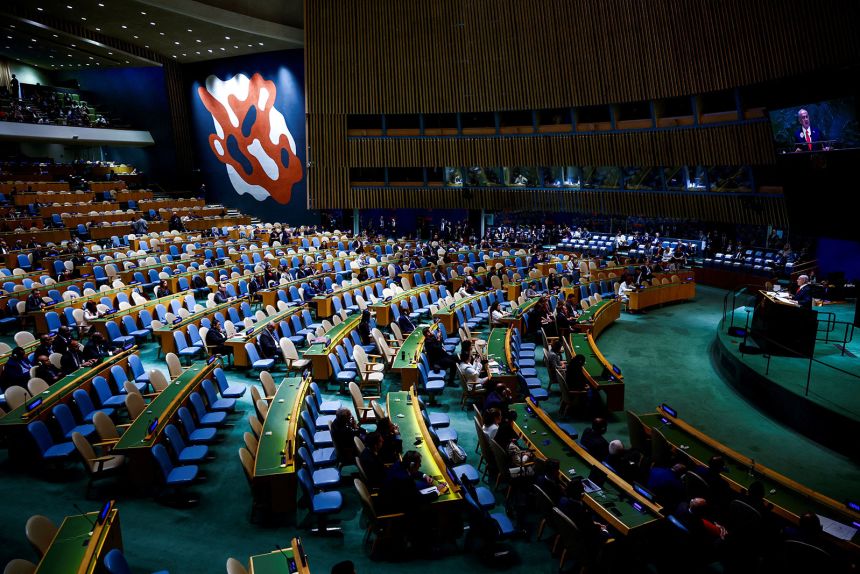
Trinidad and Tobago's decision to remain inside the United Nations General Assembly while delegates left during Israeli Prime Minister Benjamin Netanyahu's address takes on a different significance when set against the accelerating diplomatic contact between Port of Spain and Israel this year.
The first discipline is not to manufacture a number. The United Nations does not issue an official walkout tally. Reuters and the BBC reported that dozens of delegates left; Foreign Policy put the number at more than 100. These are estimates of people, not countries. Reports claiming nearly 70 or 77 countries combine delegations seen leaving with countries whose seats were already vacant.[1]
Journalists Serife Cetin, Islam Dogru and Enes Canli reviewed the General Assembly footage and identified Türkiye, Palestine, Tunisia, Syria, Algeria, Yemen, Egypt, Iraq, Saudi Arabia, Jordan, Iran, Qatar, Lebanon, Malaysia, Indonesia and Kuwait among the delegations that joined the walkout. TRT World also named Pakistan.[2]
A further sixteen countries were named only in the broader category of having walked out or being absent: Spain, Brazil, Peru, Cuba, Nigeria, Ghana, Libya, Bangladesh, Afghanistan, Oman, Niger, Madagascar, Botswana, The Bahamas, Antigua and Barbuda and Cabo Verde. They cannot responsibly be labelled confirmed participants in the walkout on that evidence alone.[3]
Trinidad and Tobago was in the chamber. UN Ambassador Dr Neil Parsan confirmed that the delegation remained throughout Netanyahu's 24 September address. ‘Our seats remained and will remain occupied for all speakers at UNGA81,’ he told the Trinidad Guardian. Parsan said staying was not an endorsement, restated support for a two-state solution and pointed to Trinidad and Tobago's recognition of Palestine in 2024 and its recent United Nations voting record.[4][5]
The comparison matters because presence in that chamber was visible diplomatic conduct. The United States, Germany, Argentina, Hungary, Serbia, Ukraine, Czechia and Greece were among the other delegations reported to have remained. But neither that group nor the walkout list is complete, and the graphic below keeps verified departures separate from mere absence.[4]
UNGA81 · Evidence map
Who walked out—and who stayed
The comparison sets the delegations identified leaving the chamber against confirmed examples that remained, while keeping separately reported empty seats in their proper category.
Reported walkout
- Türkiye
- Palestine
- Tunisia
- Syria
- Algeria
- Yemen
- Egypt
- Iraq
- Saudi Arabia
- Jordan
- Iran
- Qatar
- Lebanon
- Malaysia
- Indonesia
- Kuwait
- Pakistan*
Confirmed examples that remained
- Trinidad and Tobago
- United States
- Germany
- Argentina
- Hungary
- Serbia
- Ukraine
- Czechia
- Greece
Walked out or absent — not distinguishable
- Spain
- Brazil
- Peru
- Cuba
- Nigeria
- Ghana
- Libya
- Bangladesh
- Afghanistan
- Oman
- Niger
- Madagascar
- Botswana
- The Bahamas
- Antigua and Barbuda
- Cabo Verde
* Pakistan appears in TRT World's account. Countries in the final column were reported through combined absence-or-departure counts rather than footage confirming that each delegation walked out.
Sources: reporting by Serife Cetin, Islam Dogru and Enes Canli; TRT World; Reuters; Foreign Policy; Trinidad Guardian. See citations [1]–[5].
A relationship moving faster
Parsan's explanation must be recorded on its own terms. So must the surrounding record. On 5 February, Mattanya Aharon Cohen formally presented his credentials as Israel's non-resident ambassador to Trinidad and Tobago. In April, High Court orders placed Hamas, Hezbollah and Iran's Islamic Revolutionary Guard Corps within Trinidad and Tobago's terrorist-entity framework and froze property connected to the listed organisations.[6]
Israeli Foreign Minister Gideon Sa'ar publicly welcomed those orders. After speaking with Foreign and CARICOM Affairs Minister Sean Sobers in June, Sa'ar said Israel wanted to strengthen relations across several fields and that he looked forward to receiving Sobers in Israel.[6]
The diplomatic language was followed by a development mission. In July, Cohen and Eynat Shlein, director-general of MASHAV, Israel's international cooperation agency, met Trinidad and Tobago officials. The published agenda ranged across agriculture, food security and education to cybersecurity, smart cities, climate resilience, medicine, institutional capacity, public-private partnerships and support for smaller businesses.[6]
That is a broad programme, not a ceremonial exchange. Israeli representatives also held meetings covering foreign affairs, health, planning, national security, infrastructure, technology and agriculture. Within months, a newly accredited ambassador, minister-to-minister contact and detailed technical discussions had made the relationship more visible and more operational.[6]
The same movement reached the academic sphere. UWI's Institute of International Relations planned a webinar with former Israeli ambassador Ephraim Ben Matityahu, then cancelled it on 25 September amid controversy over the Israeli-Palestinian conflict. The institute apologised and reaffirmed commitments to academic freedom, human rights, respectful dialogue and peace.[7]
Parsan's explanation—that Trinidad and Tobago listens to every speaker—does not erase the diplomatic meaning of the decision. Governments communicate through presence as well as statements. Trinidad and Tobago stayed as its engagement with Israel was becoming broader, more frequent and more operational. In that context, remaining in the chamber was part of the relationship: a visible choice consistent with the closer bilateral course established during 2026.
The Government says its fundamental policy has not changed. It continues to support Palestinian statehood and a negotiated two-state solution. That position now sits beside a more active relationship with Israel—and beside a choice, watched across the General Assembly, to remain when many others left.
Citations & source document
- [1]UNGA81 walkout — reported scaleNo official exact tally existsSeparates estimates of individual delegates from country counts and records the absence of an official UN tally.
- [2]UNGA81 footage review — reported walkoutsSixteen delegations identified as joining the walkoutCountries identified by published review of General Assembly footage, with the source limitation stated.
- [3]UNGA81 attendance methodologyThe largest country estimates combine absence with departureExplains why the largest country estimates cannot be represented as confirmed physical walkouts.
- [4]Delegations reported presentTrinidad and Tobago remained, alongside a separately reported groupRecords confirmed examples that remained, including Trinidad and Tobago; it is not a complete attendance list.
- [5]Trinidad and Tobago's stated positionStaying was not presented as endorsementAmbassador Neil Parsan's on-record explanation that staying was not endorsement.
- [6]Trinidad and Tobago–Israel bilateral record, 2026A visibly more active period of Trinidad and Tobago–Israel engagementCredentials, court listings, ministerial contact and the MASHAV mission.
- [7]UWI Institute of International Relations event recordUWI institute cancelled a webinar with a former Israeli ambassadorRecords the cancellation without extending the institute's statement beyond what could be verified.
Every document cited above is held on this site, with the key clauses, extracts and findings set out in full and a link to the document of record.
Cite this article
Outlets, researchers and broadcasters may quote this reporting with credit and a link to the original.
Robinson, P. (27 September 2026). "T&T stayed for Netanyahu's UN speech as ties with Israel grew more active". PearceRobinson.com. https://pearcerobinson.com/reporting/trinidad-tobago-stayed-netanyahu-un-speech-israel-ties
Sources
- 1Reuters — Dozens of delegates walk out at start of Netanyahu speech
- 2Foreign Policy — More than 100 delegates reported leaving
- 3Serife Cetin, Islam Dogru and Enes Canli — review of delegations that walked out or were absent
- 4Trinidad Guardian — T&T defends staying and reaffirms two-state policy
- 5Office of the President — presentation of credentials
- 6Ministry of Planning — strategic development discussions with Israeli delegation
- 7103FM — UWI IIR cancels webinar with Israeli official
Independent reporting by Pearce Robinson. Corrections and responses may be submitted here.