Governance · Commentary
Calling senators ‘satanic’ is not an argument. It is an attack on the constitutional check they represent.
Kamla Persad-Bissessar asked the United Nations to trust independent institutions abroad, then denounced independent judgment at home. The contradiction is larger than one ugly phrase.
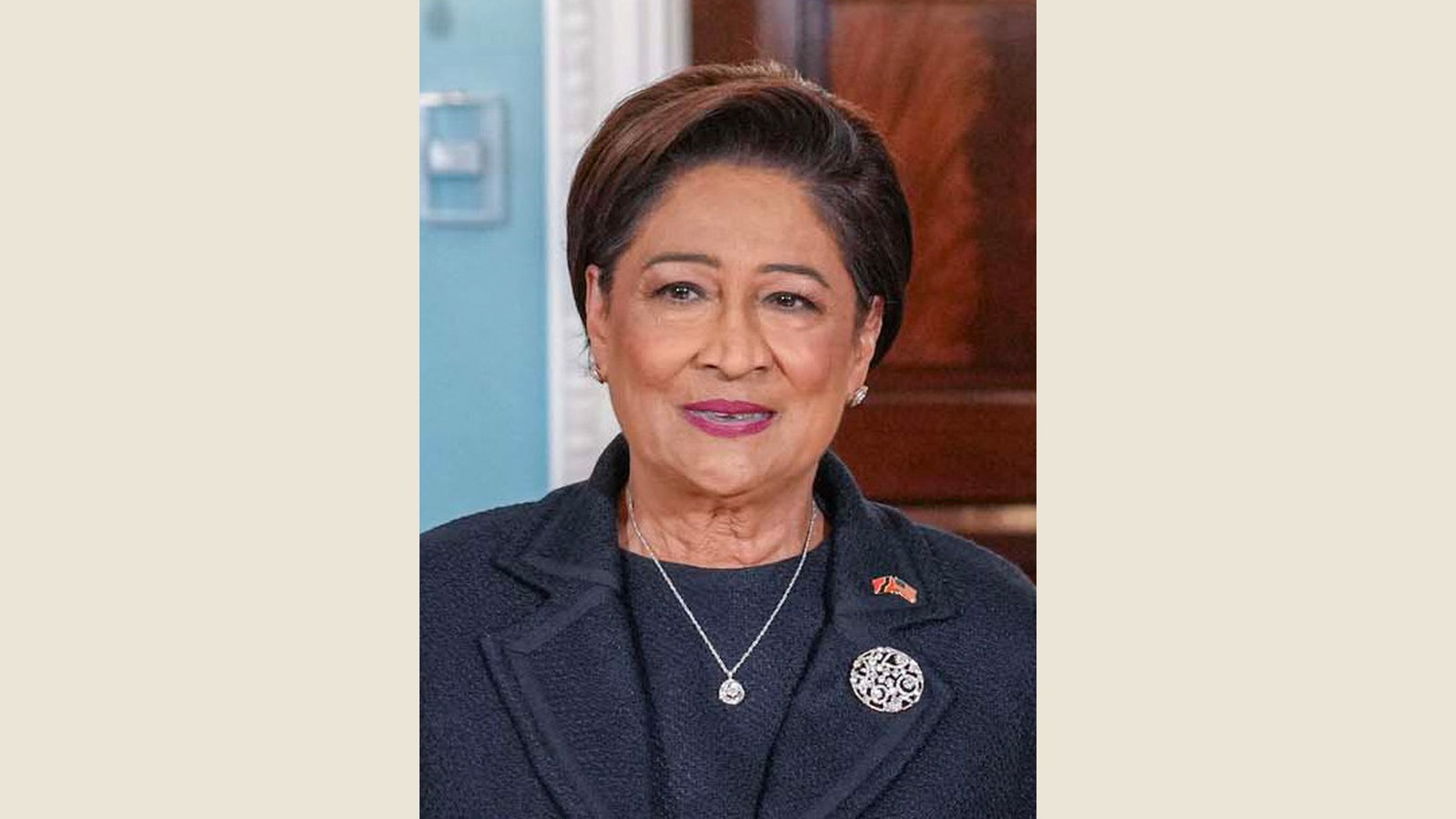
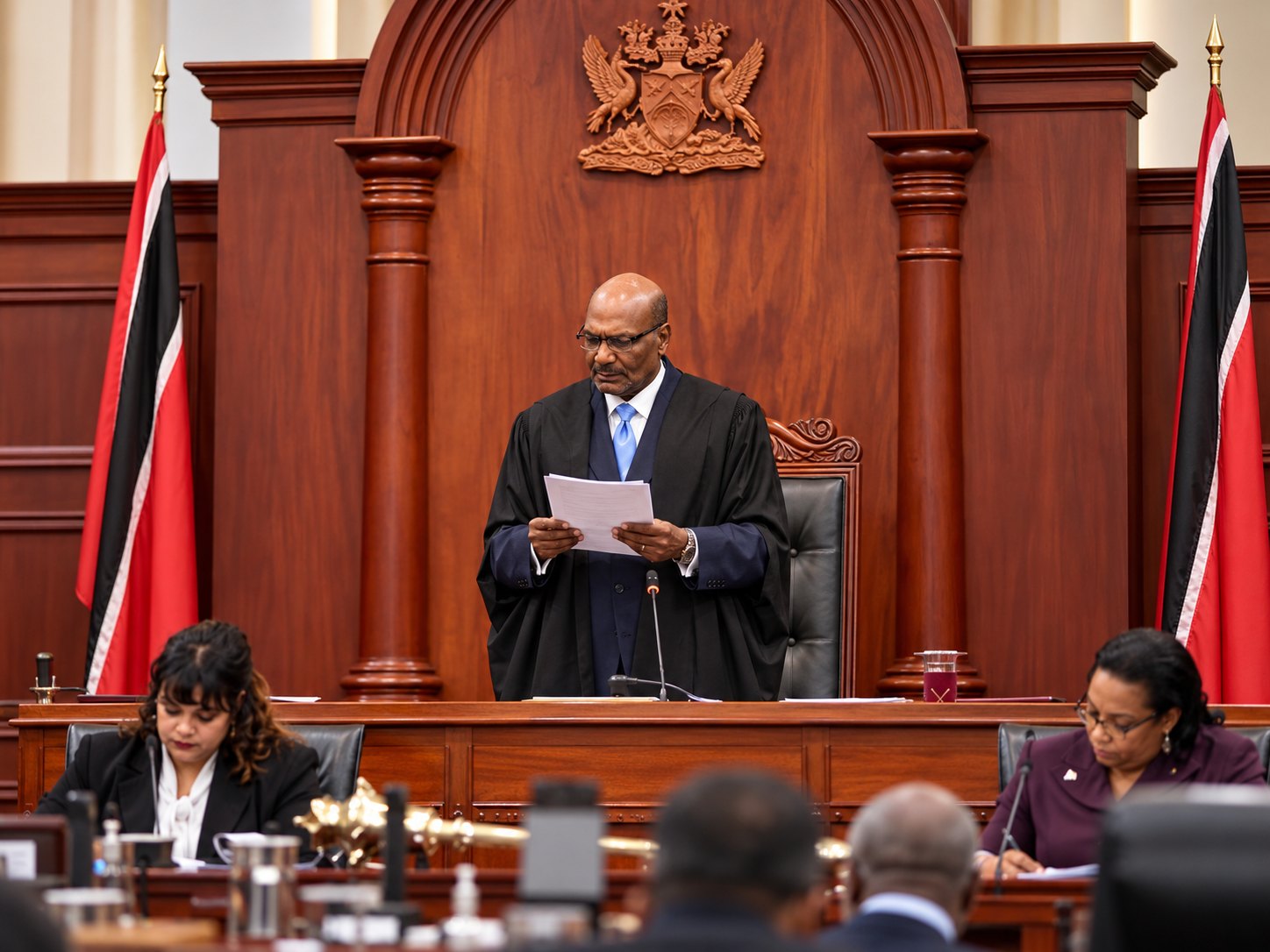
Nine senators examined a Bill that permits closed areas, curfews, controls on movement, warrantless searches and extended detention. They all voted no. The Prime Minister's answer was not to meet their objections. It was to call them ‘Satan's helpers’, ‘satanic’, ‘demons’ and ‘scumbags’, and to accuse them of protecting drug traffickers, rapists and murderers.[1]
Those descriptions were Kamla Persad-Bissessar's reported opinions. They were not findings about the senators, and they bore no honest resemblance to the reasons given in the Senate. The Independent bench questioned safeguards, political influence, oversight, detention, the breadth of closed-area powers and a body-camera requirement weakened by the words ‘as far as resources permit’.[2] A vote against that framework was a judgment about State power. Turning it into an alliance with criminals substitutes moral denunciation for an answer.
What independence is for
The nine Independent senators do not sit in Parliament by the grace of the Government. Section 40 of the Constitution places their appointment in the President's discretion and directs that they be drawn from outstanding people in civic and professional life.[3] Sixteen senators arrive on the Prime Minister's advice. Six arrive on the Opposition Leader's. The remaining nine exist precisely so that every legislative question is not reduced to the arithmetic of party loyalty.
Independence has little value if it is welcomed only when it produces the Government's preferred vote. Its constitutional purpose is most visible when the Executive wants urgency and the independent members insist upon limits. That friction is not a defect in democracy. It is one of democracy's safety devices.
The Special Operations Bill passed only after the Senate divided 15–15 and President of the Senate Wade Mark cast his vote with the ayes, declaring a final result of 16–15.[4] Every Government senator voted for it. Every Independent senator and every Opposition senator voted against it. A division that exact should have produced humility: a recognition that extraordinary policing powers had failed to persuade anyone outside the Government bench. Instead, dissent was recast as depravity.
The constitutional check the rhetoric targeted
- 9
- Independent senators — all voted against
- 15–15
- Senate division before the casting vote
- 16–15
- Final result declared by the Senate President
The Independent bench's unanimity did not defeat the Bill. It exposed how little support the measure had beyond the Government bench.
Source · Constitution, section 40; Parliament and contemporaneous Senate reporting
The word ‘satanic’ matters because it removes the listener from ordinary democratic disagreement. A critic can be answered. A mistaken senator can be persuaded. But a person cast as an agent of evil is not someone with whom government must reason; he or she becomes someone whom the public is invited to despise. That is the danger of the language. It does not rebut scrutiny. It delegitimises the scrutiniser.
The danger became institutional when the Prime Minister reportedly said her Government would no longer accept amendments from Independent senators and that they had relegated themselves to irrelevance.[5] Governments are entitled to reject amendments on their merits. A declared refusal to entertain them because of who proposes them is different. It converts lawmaking from deliberation into punishment and treats constitutional independence as insubordination.
This did not begin last week
The September attack follows earlier confrontations with the same constitutional check. In January, after a related Zones of Special Operations Bill failed, the Prime Minister alleged that two unnamed Independent senators had sought personal favours in return for votes. They denied it. She did not publicly identify them or produce evidence. The Law Association warned that unproven allegations of corruption against unnamed senators undermined Parliament and public confidence.[6]
Months earlier, when the Law Association defended the Independent bench against attacks on its integrity, Persad-Bissessar called the organisation elitist and questioned its neutrality. In October 2025, after it raised concerns about the speed of the Chief Justice appointment process, she described the Association as ‘defiled and discredited’ and used still more abusive language about its leadership. These episodes are not identical, and criticism of any professional body is legitimate. The recurring method is what deserves attention: institutional disagreement is met by discrediting the institution or the people speaking through it.
There are counter-examples and they matter. Her Government supported a Police Service Commission nominee for Commissioner without a partisan division, and it facilitated the Auditor General's access to Central Bank systems. A serious assessment should not turn every interaction into evidence of hostility. The narrower and better-supported conclusion is that independent criticism—especially from the Senate and the Law Association—has repeatedly drawn personal denunciation rather than a sustained response to substance.
The speech in New York
Two days before the Senate vote, Persad-Bissessar told the United Nations that transnational criminal networks endanger citizens, institutions and development. Preparing for Trinidad and Tobago's 2027–2028 Security Council term, she promised an ‘independent and practical outlook’, adherence to the Charter and international law, and constructive work with all members.[7] She spoke under the theme of restoring trust and called for institutions that are responsive, effective and capable of delivering for people.[8]
The security diagnosis deserves to be taken seriously. Guns, narcotics and organised criminal finance impose a brutal cost on small states. Her call for international cooperation is not objectionable merely because it is forceful. The weakness of the speech lies in the model of trust it left unexamined. Institutions do not become trustworthy simply because they deliver the result an executive wants. They earn trust by following law, accepting scrutiny, explaining decisions and tolerating independent judgment—even when that judgment is inconvenient.
That is the contradiction between New York and Port of Spain. At the United Nations, independence was presented as a national virtue. At home, nine people exercising independent judgment were described as helpers of Satan. Abroad, the Prime Minister invoked institutions threatened by criminal networks. At home, her rhetoric treated an institutionally protected dissenting vote as if it were criminal complicity.
The speech also placed substantial faith in United States-led security initiatives, thanking President Donald Trump for Trinidad and Tobago's inclusion in the Shield of the Americas and the Americas Counter Cartel Coalition.[9] Yet a commitment to international law requires more than naming it. It requires consistent attention to legal limits, civilian protection and accountability—including when security operations are conducted by powerful partners. The same standard applies domestically: urgency does not extinguish the need for safeguards; it makes them more necessary.
I would have expected a country preparing to sit on the Security Council to show that discipline at home. Not softness on violent crime. Not paralysis. Discipline: precise laws, reviewable power, genuine parliamentary engagement and language that does not mark constitutional dissenters as enemies of decent people.
Persad-Bissessar is entitled to argue that the senators were wrong. She may say their safeguards were excessive, their amendments impractical or their reading of the threat inadequate. What she cannot credibly do is preach institutional trust internationally while declaring independent scrutiny morally corrupt domestically.
A government confident in its Bill answers the objections. A government confident in Parliament listens, decides and explains. Calling senators ‘satanic’ does none of those things. It tells every independent office-holder what may follow when independence produces the wrong answer.
Citations & source documents
- [1]Prime Minister's remarks after the vote‘Satan's helpers’, ‘satanic’, ‘demons’ and ‘scumbags’The inflammatory descriptions and criminal-complicity allegations were the Prime Minister's reported characterisations, not established facts about the senators.
- [2]Independent senators' stated objectionsSafeguards, oversight and extraordinary powersThe objections concerned safeguards, oversight and the control of extraordinary State powers.
- [3]Constitution — section 40Nine senators chosen independently of government and oppositionNine senators are appointed by the President in her discretion, separate from the Government and Opposition nominees.
- [4]Special Operations Bill — Senate divisionA 15–15 division followed by a casting voteThe Senate divided 15–15 before the President of the Senate cast his vote with the ayes and declared 16–15.
- [5]Declaration on future amendmentsGovernment would reject future Independent-bench amendmentsReports record the Prime Minister saying the Government would no longer accept Independent-bench amendments.
- [6]January 2026 episodeUnproven inducement allegations after an earlier Bill failedThe earlier unnamed inducement allegations were denied and were not substantiated in the cited public record.
- [7]2026 UN address — Security Council pledgeAn ‘independent and practical’ outlookThe Prime Minister pledged an independent, practical and Charter-guided Security Council posture.
- [8]2026 UN address — restoring trustRestoring trust through institutions that deliverThe address called for responsive and effective institutions under the General Assembly's trust theme.
- [9]2026 UN address — security partnershipsSupport for United States-led security initiativesThe Prime Minister thanked the United States for including Trinidad and Tobago in two regional security initiatives.
Every document cited above is held on this site, with the key clauses, extracts and findings set out in full and a link to the document of record.
Cite this article
Outlets, researchers and broadcasters may quote this reporting with credit and a link to the original.
Robinson, P. (26 September 2026). "Calling senators ‘satanic’ is not an argument. It is an attack on the constitutional check they represent.". PearceRobinson.com. https://pearcerobinson.com/reporting/satanic-senators-kamla-independent-institutions
Sources
- 1Constitution of Trinidad and Tobago — section 40
- 2Parliament — The Special Operations Bill, 2026
- 3Parliament — Senate debate, 22 September 2026
- 4Trinidad Express — PM calls Independent senators ‘Satan's helpers’, 25 September 2026
- 5Trinidad Guardian — Independent bench defends its constitutional role, 25 September 2026
- 6Trinidad Express — Law Association on January's unproven allegations
- 7TTT News — Prime Minister questions Law Association neutrality, 8 July 2025
- 8Trinidad Express — Prime Minister attacks Law Association, 24 October 2025
- 9TTT News — report of the Prime Minister's 2026 UN address
- 10103.1FM — Security Council commitments in the 2026 UN address
Independent reporting by Pearce Robinson. Corrections and responses may be submitted here.