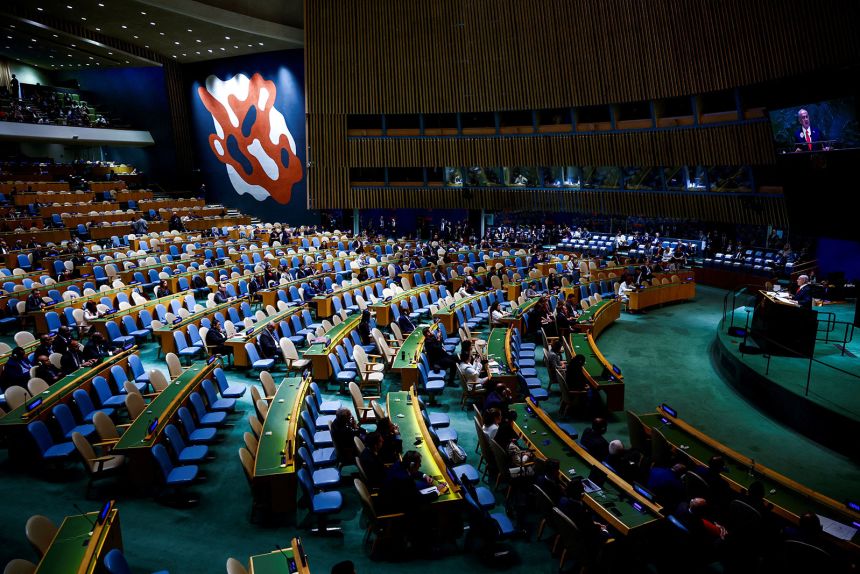
The Miscellaneous Provisions (Alcohol, Cannabis, Dangerous Drugs, Gambling and Tobacco) Bill, 2026 is not simply a Bill to change the legal drinking age. House Bill No. 17 of 2026, introduced on 30 September, contains nine clauses amending seven separate laws: the Dangerous Drugs Act, Registration of Clubs Act, Tobacco Control Act, Children Act, Liquor Licences Act, Gambling (Gaming and Betting) Control Act and Cannabis Control Act. As of publication, Parliament records the measure at second reading in the House of Representatives, with Senate consideration scheduled for 2 October. It is therefore important to distinguish throughout between what the Government proposes and what is presently law. Even after passage and assent, clause 2 provides that commencement would occur on a date subsequently fixed by the President by Proclamation.12
The headline changes are significant enough: the framework moves alcohol and tobacco from 18 to 21 and cannabis and gambling to 25. But Parliament’s own 23-page Bill Essentials shows that the legislation is simultaneously creating a much broader system of offences, financial penalties, rehabilitation orders and substantially increased criminal sanctions. A person in one of the newly prohibited age groups can face a $50,000 fine on summary conviction for several types of conduct. Some commercial offences escalate into six-figure or million-dollar fines and prison terms reaching 30 years. Police would also gain power to issue fixed-penalty notices under several of the amended Acts, with rehabilitation offered in lieu of payment in defined circumstances.2
The Bill at a glance
One Bill. Seven laws. Multiple age limits. New offences. New penalties.
Clause 3
Dangerous Drugs Act
Cannabis allowances limited to those over 25; new fixed-penalty scheme.
Clause 4
Registration of Clubs Act
Member-club age 21 → 25; penalty $10,000 → $50,000.
Clause 5
Tobacco Control Act
Sales age 21; $50,000 age offences; seller penalties up to 30 years.
Clause 6
Children Act
New offences and $50,000 penalties, reaching children over ten.
Clause 7
Liquor Licences Act
Alcohol 21, gaming areas 25; stronger duties, larger penalties.
Clause 8
Gambling Control Act
Minimum age moves to 25; remote-gambling licensing.
Clause 9
Cannabis Control Act
Thresholds to 25, including sacramental dispensing.
Source: Parliament's Bill Essentials, reflecting the Bill as introduced. 2
There is an important distinction at the outset. An 18-, 19-, 20-, 21-, 22-, 23- or 24-year-old is not being turned back into a legal minor. Trinidad and Tobago’s Age of Majority Act provides that full age is attained at 18. The Bill instead creates particular activities which an adult may no longer lawfully undertake until 21 or 25. That distinction becomes especially important because some of the proposed restrictions are backed not merely by refusal of service or removal from premises, but by criminal offences carrying substantial financial penalties.3
Interactive
What changes at your age?
Alcohol
restricted
Under 21
Tobacco
restricted
Under 21
Cannabis
restricted
Under 25
Gambling
restricted
Under 25
Adults in law, but barred from all four activities. Specified offences: up to $50,000 on summary conviction. 2
This does not mean every breach results in a $50,000 payment. The Bill also creates fixed-penalty and rehabilitation routes; $50,000 is the maximum fine on summary conviction.
Illustrative example based on the Bill as introduced
The Bill in one view
Parliament’s Legal Unit expressly cautions that its Bill Essentials reflects the legislation as introduced and does not cover subsequent amendments or developments. Any committee-stage amendment will therefore have to be checked against this analysis before publication as a final account of the law.2
Seven-law navigator
Clause by clause
Clause 3 · Dangerous Drugs
- What changes
- Cannabis possession and cultivation allowances apply only to persons “over the age of twenty-five years”.
- Who is affected
- Adults under 25 who possess or grow small quantities of cannabis.
- Penalty
- Fixed penalty (amount by Order) or 30-hour rehabilitation; section 5C fine doubles from $250,000 to $500,000 with five years retained.
- Why it matters
- It narrows an existing decriminalised allowance, not just a sales rule.
Before
Allowances for adults
Under the Bill
Only persons over 25
Clause 3 — Dangerous drugs and cannabis possession
Clause 3 changes the Dangerous Drugs Act in a way that goes considerably beyond the Cannabis Control Act. The current statutory exceptions allowing possession of no more than 30 grammes of cannabis, no more than five grammes of cannabis resin and possession or cultivation of no more than four growing male cannabis plants would be qualified by inserting the words “over the age of twenty-five years.” Parliament’s analysis says the practical effect is that those exceptions would apply only to people over 25. That wording is worth noting because the public debate routinely describes the threshold simply as “25”, whereas the legislative wording summarised by Parliament is “over the age of twenty-five”.2
Clause 3 also replaces the existing section 5B with a much larger fixed-penalty architecture for persons under 25. It covers, among other conduct, possession of cannabis in specified quantities above the basic allowance, public cannabis use, cannabis possession in specified places involving children, operating vehicles or vessels while under the influence and certain professional negligence or misconduct while impaired. A police officer could issue a fixed-penalty notice requiring payment or, instead, commencement of a prescribed rehabilitation programme within 28 days. Successful payment or completion of the programme would prevent conviction for the offence covered by the notice.2
The actual amount of that fixed penalty is not stated in the Bill Essentials. It would later be prescribed by the Health Minister by Order, subject to negative resolution of Parliament. The rehabilitation regime is more specifically described: it can include at least 30 hours of community work, 30 hours of counselling through a faith-based organisation or 30 hours of counselling by a qualified psychologist. If neither the penalty nor rehabilitation is completed, the underlying criminal proceedings can continue through the Summary Courts system.2
How enforcement would work
From police encounter to conviction — or no conviction
If completed
No conviction for that offence
If not completed or contested
Court proceedings may follow
30 hrs
Minimum · Community work
30 hrs
Minimum · Faith-based counselling
30 hrs
Minimum · Qualified psychological counselling
Implementation questions the Bill does not answer
- Who will provide it?
- How many people can the system handle?
- Who pays?
- How will completion be verified?
Procedure as described in Bill Essentials. 2
Clause 3 separately doubles the summary-conviction fine for offences under section 5C from $250,000 to $500,000, while retaining five years’ imprisonment. Those are distinct from the special $50,000 age-based offences discussed later under the Children Act and Cannabis Control Act.2
Clause 4 — Member clubs move to 25
Clause 4 raises the admission age for a member club not principally devoted to athletics from 21 to 25. A club principally devoted to athletic purposes could continue admitting people under 25, but those members would not be permitted to gamble on the premises. The general penalty under the Registration of Clubs Act, where no other penalty is specified, would rise fivefold from $10,000 to $50,000.2
For private clubs that combine social activity, alcohol and gaming, this produces an important commercial distinction. An adult between 21 and 24 may be old enough to drink under the proposed alcohol provisions but still be too young for ordinary club membership under this clause, unless the athletic exception applies, and in any event would remain excluded from gambling. The Bill is therefore creating different statutory thresholds for different activities rather than one new universal age of adulthood.
One customer, three age rules
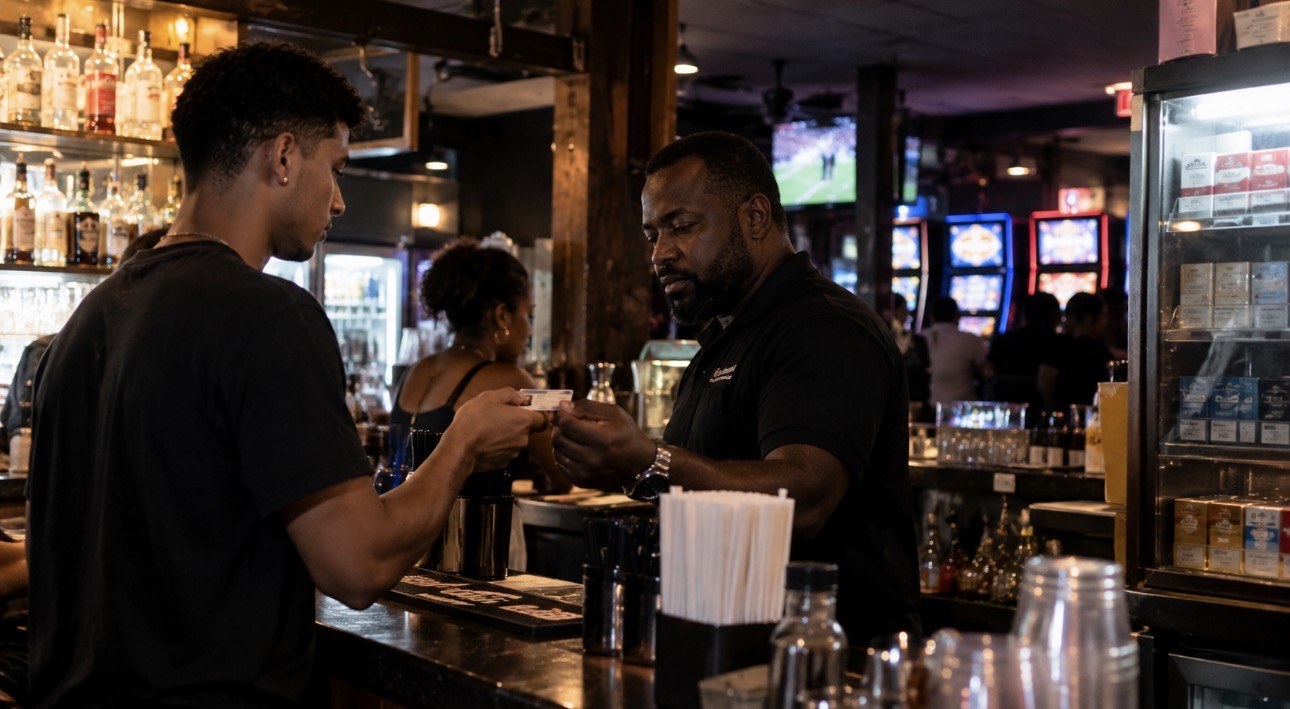
A 22-year-old walks into a licensed bar
- Can enter the venue? Depends on premises and area
- Can buy alcohol? Yes — 21 or over
- Can gamble? No — under 25
- Can enter the gaming area? No — under-25s barred from that section
- Can join an ordinary member club? No — unless athletic, and never to gamble
Illustrative example based on the Bill as introduced
Clause 5 — Tobacco: 21, $50,000 offences and much larger commercial penalties
Clause 5 raises the tobacco-sales age to 21 and requires vendors to update statutory signage accordingly. It also adjusts rules concerning tobacco advertising by mail and the sale of individual smoked tobacco products and smokeless products so that the new 21-year threshold is incorporated across the regime. A person under 21 who smokes in specified enclosed public premises would, subject to the new fixed-penalty provisions, commit an offence carrying a $50,000 fine on summary conviction.2
The Bill deliberately separates younger offenders from the much heavier penalties applying elsewhere in the Act. For the specified sections governing sales and related tobacco offences, the proposed first-offence penalty rises from $150,000 and nine months’ imprisonment to $300,000 and ten years. A second or subsequent offence rises from $300,000 and 18 months to $600,000 and 20 years. Conviction on indictment for the specified offences rises to $1 million and 20 years, while offences for which the Act otherwise specifies no penalty could attract $500,000 and 15 years on summary conviction or $1 million and 30 years on indictment.2
The tobacco fixed-penalty framework broadly resembles the Dangerous Drugs model: police can issue a notice to an under-21 person in specified circumstances, the amount is later prescribed by the Minister, rehabilitation may be chosen in lieu of payment, the notice may be challenged before the District Criminal and Traffic Court, and payment or completion of rehabilitation avoids conviction. Separately, failure by a seller to display the required age restriction notice would jump from a $500 fine to $100,000.2
That enforcement design is worth comparing with international tobacco-control practice. The US Centers for Disease Control supports raising the tobacco sales age to 21 as part of a broader public-health strategy, but its review specifically says policies free of youth purchase, use or possession penalties can help prevent youth tobacco use and notes research indicating that penalising young users themselves may not be effective at changing behaviour. That does not determine what Trinidad and Tobago should legislate, but it shows that raising the sales age and criminalising the younger consumer are separate policy choices.4
Clause 6 — The Children Act and the $50,000 question
Clause 6 contains some of the Bill’s most consequential provisions. Existing penalties for adults exposing children to dangerous drugs would rise sharply. Parliament’s analysis says exposing a child to a dangerous drug would become punishable by $3 million and 15 years’ imprisonment on summary conviction, and $5 million and 30 years on indictment. Fines for giving a child a dangerous drug and using a child to sell, buy or deliver dangerous drugs would likewise rise into the millions.2
But the clause also imposes liability directly upon young people. Where police reasonably believe a child possesses or is using tobacco, cannabis, cannabis resin, alcohol or a dangerous drug, the officer is to obtain identifying information, issue a warning and notify the Children’s Authority, which would contact the parent or guardian. The Bill then provides that a child over the age of ten found committing specified possession or use offences commits an offence and is liable on summary conviction to a $50,000 fine.2
One of the Bill's most significant changes
Child over 10
- Police encounter
- Identification details
- Warning
- Children's Authority notified
- Parent or guardian contacted
The Bill also creates fixed-penalty and rehabilitation options. Parliament's materials do not say how often prosecution rather than diversion is expected. 2
New section 38A would additionally make it an offence for a person under 21 to consume or possess alcohol or smoke or possess tobacco products, again with a $50,000 summary-conviction fine. New section 38B applies a corresponding $50,000 penalty to a person under 25 who smokes or possesses cannabis or cannabis resin, or uses or possesses a dangerous drug or substance. These offences would sit behind a fixed-penalty regime allowing police to offer payment or prescribed rehabilitation instead of allowing the case to proceed immediately to conviction.2
This is where some public discussion has become imprecise. The $50,000 age-specific offence itself is not described in Parliament’s analysis as carrying a term of imprisonment. The large 15-, 20- and 30-year custodial sentences elsewhere in the Bill generally concern different offences involving sellers, operators, unlicensed conduct or adults exposing children to drugs. The proposed law is already substantial without conflating those two categories.2
Do not confuse these
Conviction, ticket and imprisonment are three different things
1
$50,000 age-based offences
Specified conduct by younger persons. Not described as carrying imprisonment.
2
Fixed penalty
Amount to be prescribed separately by ministerial Order. Payment avoids conviction.
3
15–30 year prison terms
Different offences: sellers, operators, repeat offences, unlicensed activity, adults exposing children to drugs.
An underage drinking offence does not carry decades in prison under the Bill as introduced. 2
The policy issue Parliament will have to consider is therefore broader than whether children and young adults should be discouraged from using these products. It is whether a conviction-level $50,000 criminal penalty, even when accompanied by diversion through fixed penalties and rehabilitation, is an appropriate enforcement structure for a child who may be as young as 11, and how that system will operate where a young person or family has no realistic capacity to pay. Parliament’s materials establish the offence and alternative system, but do not quantify how often prosecution rather than diversion is expected to occur.
Clause 7 — What it means for bars, restaurants and licensed premises
Clause 7 is where the direct commercial consequences become clearest. A licensed premises hosting amusement games would no longer be permitted to allow a person under 25 into the section where those games are situated or permit that person to participate. The current age identified by Parliament is 18. The corresponding penalty for the licensed operator rises from $1,000 to $100,000.2
Other penalties rise much further. Selling spirits without the required licence moves from $30,000 to $100,000, and the corresponding penalty involving other liquor moves from $15,000 to $75,000. The penalty identified for unlawful retail rises from $6,000 to $300,000 and 30 years’ imprisonment. Gambling on premises licensed for retail alcohol sales rises from $3,000 to $100,000.2
The under-21 sales provision is particularly significant. A person who knowingly sells or allows another person to sell intoxicating liquor to somebody under 21 would face $50,000 and 15 years’ imprisonment for a first offence, $150,000 and 20 years for a second, and $300,000 and 30 years for a third or subsequent offence. Failure to display the required under-21 alcohol notice rises from $15,000 to $50,000.2
The Bill also introduces a new section 60B concerning children on licensed premises. Holders of specified spirit, wine, hotel, restaurant and night-bar licences could face a $300,000 fine and possible licence revocation for knowingly inviting, causing or permitting a child into the part of the premises where alcohol is sold or consumed. There are exceptions where the area is a dwelling in which the child lives or where the child is eating a meal or attending a function under adult supervision, but Parliament’s analysis says the latter exception does not apply after 9 p.m. or where the premises operates under a night-bar licence. The fine for permitting drunkenness or violent, quarrelsome or disorderly behaviour also rises from $3,000 to $100,000.2
Tap a zone
What the Bill means on a licensed floor
Bar: Alcohol threshold: 21. Knowingly selling to an under-21: $50,000 and 15 years (first offence). Notice not displayed: $50,000. 2
Illustrative example based on the Bill as introduced
The clause creates another fixed-penalty and rehabilitation system for specified liquor offences involving under-21s. The cumulative effect for an operator is therefore not merely the loss of 18-, 19- and 20-year-old alcohol customers. The premises must also distinguish between the 21 alcohol threshold, the 25 gaming threshold and the separate rules applying to children physically present in alcohol-serving areas. The Bar Keepers and Operators Association has said it supports raising the drinking age to 21 but wants mandatory identification requirements, warning that bars will lose some trade and that ineffective enforcement could push some younger consumers toward illegal sources.2
Selected proposed penalties
What businesses would face
- Failure to display under-21 alcohol notice$15,000$50,000 2
- Tobacco age notice not displayed$500$100,000 2
- Under-25 in amusement-gaming section$1,000$100,000 2
- Gambling on retail-alcohol premises$3,000$100,000 2
- Spirits sold without licence$30,000$100,000 2
- Knowingly selling alcohol to under-21 (first)—$50,000 + 15 yrs 2
- Knowingly selling alcohol to under-21 (third+)—$300,000 + 30 yrs 2
- Unlawful retail$6,000$300,000 + 30 yrs 2
- Child in alcohol area (s.60B)—$300,000 + possible revocation 2
Clause 8 — Gambling moves to 25
Clause 8 requires licensed gambling premises to display rules prohibiting gambling by persons under 25. It extends existing prohibitions involving children to everybody under 25, making it an offence knowingly to invite, cause or permit someone in that group to gamble or to enter licensed gambling premises other than a race track. New section 82A separately criminalises the conduct of the younger person: somebody under 25 who gambles electronically or otherwise, or enters or is found on gambling premises other than a race track, would be liable on summary conviction to $50,000, subject to the fixed-penalty provisions.2
The clause contains other gambling reforms unrelated to age. Conducting remote gambling without a valid Gambling Control Commission licence would attract $5 million and seven years’ imprisonment. Engaging in bookmaking or betting in a street or public place would carry a $50,000 fine, but notably the Bill would remove the existing one-year imprisonment component for that particular offence. Failure by licensed premises to maintain required signage rises to $100,000.2
Again, the Bill establishes diversion through fixed penalties and rehabilitation. The fixed-penalty amount would be set later by the relevant Minister by Order, subject to negative resolution. Rehabilitation may include at least 30 hours of community work, faith-based counselling or counselling conducted by a qualified psychologist. Completion would prevent further sanction or conviction for the specified offence.2
There is evidence supporting additional protection for younger gamblers, although it does not produce one inevitable legal response. The UK Government’s gambling review concluded that 18- to 24-year-olds are particularly vulnerable to gambling-related harm and later imposed lower online-slot stake limits on that group. But the same review expressly concluded that raising the general gambling age above 18 would be disproportionate and instead adopted enhanced protections for the 18–24 cohort. That comparison does not establish whether Trinidad and Tobago’s proposed age of 25 is right or wrong; it demonstrates that vulnerability evidence can support different regulatory models.67
Clause 9 — Cannabis control and the age of 25
Clause 9 amends the Cannabis Control Act itself. Unauthorised use of medicinal cannabis without a prescription or recommendation from a medical practitioner would attract substantially increased penalties: $100,000 and ten years’ imprisonment on summary conviction, or $200,000 and 20 years on indictment. For an offender under 25, however, the Bill creates a separate $50,000 summary-conviction penalty subject to fixed-penalty provisions.2
Sacramental dispensaries would be permitted to dispense cannabis only to registered adherents of the relevant religious organisation who are over 25. Causing or permitting cannabis to be dispensed to a person under 25 at a place of worship, sacramental dispensary or exempt event would attract $500,000 and 30 years’ imprisonment. Where the offender is themselves under 25, the separate $50,000 framework would apply instead. Clause 9 then establishes essentially the same payment, rehabilitation, contest and court-proceeding machinery used elsewhere in the Bill.2
Government has said science is informing the 25-year cannabis threshold. In May, Minister Saddam Hosein told Parliament that Government was “looking at the science” and intended to move cannabis use to 25. Earlier, in January, Prime Minister Kamla Persad-Bissessar had announced an initial policy of moving cannabis from 18 to 21, while gambling would move to 25; the final introduced Bill therefore represents a further shift in the cannabis proposal.13
The neuroscientific justification deserves careful presentation. Brain development does continue into young adulthood, but a 2025 peer-reviewed Perspective examining cannabis age limits concluded that there is no empirically defined point at which brain maturation suddenly ends at 25 and argued against treating 25 as a precise biological boundary. That does not establish that cannabis presents no additional risks to younger adults. It means Parliament should be able to identify the evidence supporting the particular statutory line it has chosen rather than treating “the brain develops until 25” as a self-explanatory scientific rule.5
Interactive
Why 21? Why 25?
Adult in law. Government cites protection of young people from substance abuse and addiction. 13
Lawful at 19: none of the four.
The policy question is not whether risk exists. It is where the law should draw the line.
The $50,000 system: conviction, ticket and rehabilitation are not the same thing
One point needs to be particularly clear in public reporting. $50,000 is repeatedly specified as the maximum summary-conviction fine for several age-based offences. It is not necessarily the amount somebody will be required to pay when a police officer issues a fixed-penalty notice. In several parts of the Bill, the actual fixed penalty is left to be prescribed later by ministerial Order. The person can in defined circumstances elect rehabilitation rather than payment, and successful payment or programme completion avoids a criminal conviction.2
The $50,000 explainer
$50,000 — what does it actually mean?
$50,000
A statutory maximum — not a ticket
1
Fixed penalty
Amount to be prescribed later by ministerial Order.
2
Rehabilitation
Prescribed programme — at least 30 hours — in lieu of payment.
3
Court
Where proceedings continue, specified offences carry a maximum $50,000 fine on summary conviction.
The Bill does not set every fixed-penalty amount in the primary legislation. Some details will be prescribed later. 2
That leaves important elements of implementation outside the primary legislation Parliament is presently considering. The Minister will determine fixed-penalty amounts and regulations governing aspects of rehabilitation; the Rules Committee can affect procedural periods; and administrative capacity will be required to organise community work and counselling and to record whether programmes have been completed. The Bill provides the legal architecture, but the practical severity of the diversionary system will depend significantly on those later instruments.
Bars and restaurants are not starting from zero
The economic consequences also cannot be assessed as though the Bill were arriving in isolation. In the October 2025 Budget, the Government doubled several major alcohol and tobacco duty rates: the identified rum-and-spirits rate increased from $79.25 to $158.50, beer from $5.14 to $10.28, and cigarettes from $5.26 to $10.52 per pack of 20. The Finance Ministry said 80% of its projected revenue increases from the relevant measures would come from customs duties on rum and spirits, beer and tobacco.8
The subsequent CARICOM measures are sometimes described loosely as “tariffs on CARICOM”, but that is too broad. The Customs (Import Duty) (Caribbean Common Market) Amendment Order changed specified Common Market duty rates, including beer and several categories of spirits. During the parliamentary debate, Government said the adjustment followed complaints from domestic manufacturers that doubling local excise could leave imported products with a price advantage; the corresponding customs and CARICOM rates were therefore increased where permissible to restore the intended tax relationship.9
Industry reporting subsequently documented pressure on some bars and restaurants. A Debe bar owner told Guardian in November 2025 that his sales had fallen by 40–50% after the duty increases, while the Bar Keepers and Owners Association said village and rural establishments were particularly exposed because customer spending power was lower. Those figures are individual and industry accounts rather than a national measurement, but they establish that parts of the sector reported material commercial effects after the price increase.10
Gaming has added another cost layer for some bars. The Government initially moved the annual amusement-game tax from $6,000 to $25,000 per machine and later, after consultation, reduced it to $12,500; electronic roulette was reduced from the proposed $200,000 to $120,000. A bar combining alcohol and amusement gaming can therefore face three simultaneous changes: higher product costs from the 2025 duty measures, higher gaming taxation than before, and now proposed legislation removing alcohol consumption by 18–20-year-olds and gaming access for everyone under 25.
No published material currently attached to Parliament’s Bill page or Bill Essentials quantifies what proportion of national bar, restaurant or gaming revenue comes from the affected age groups, so a precise national revenue effect cannot responsibly be stated. Economically, however, the channels are straightforward: a narrower lawful customer base can reduce demand; higher penalties increase compliance risk; age verification and staff training impose operational requirements; and bars with gaming activities face a larger affected age cohort than businesses selling alcohol alone. The Trinidad and Tobago Chamber and Beverage Alcohol Alliance have supported the youth-protection objective while requesting deeper parliamentary scrutiny, including mandatory identification and retailer training.
Bars are not starting from zero
Cumulative pressure on bars and restaurants
Government rationale: revenue mobilisation, tax parity and public health.
Not a general “CARICOM tariff”
CARICOM alcohol and tobacco imports are already taxed at the domestic rate. The 2025 order raised specified Common Market rates so doubled local excise would not hand imports a price advantage. 9
Oct 2025
Alcohol and tobacco duties doubled
2026
Higher amusement-game taxes
2026 Bill
Narrower age-eligible customer base
2026 Bill
Higher compliance and penalty exposure
A Debe bar owner reported a 40–50% fall in sales after the duty rise; the owners' association said village and rural bars were more exposed. 10Industry reporting — not a national econometric estimate
The cumulative effect has not yet been fully quantified.
What is the public-health case?
Geography of economic pressure
Why the same cost increase can hit communities differently
Explore the marked locations. Shading shows context only; it does not assign an impact score to any municipality.
Tap a markerNational context
Uneven capacity to absorb higher costs
The survey comparison is national and regional context. It does not measure the Bill’s effect or rank municipalities.
Share of household population in the bottom two national wealth quintiles 14
Urban
15.3% poorest + 17.9% second quintile
33.2%
Rural
27.2% poorest + 22.8% second quintile
50.0%
Eastern RHA
35.8% poorest + 28.7% second quintile
64.5%
What this measures: a relative, asset-based wealth ranking within the MICS survey. It is not an official poverty rate and does not measure current income or expenditure.
There is a substantive public-health rationale behind parts of the Government’s approach. Trinidad and Tobago’s 2024 WHO STEPS survey of 4,052 adults aged 18–69 found that 51.5% reported alcohol consumption during the preceding 30 days and 21.3% reported daily tobacco smoking. Those are whole-adult-population figures rather than evidence specifically about the proposed age thresholds, but they establish the scale of alcohol and tobacco exposure nationally.12
There is also strong international evidence supporting an alcohol purchase age of 21. The US CDC says states that raised their minimum drinking age to 21 before the federal requirement experienced a 16% reduction in motor-vehicle crashes, alongside declines in reported drinking among 18–20-year-olds. Again, American evidence cannot simply be assumed to produce identical effects in Trinidad and Tobago, but it provides a recognised empirical basis for the 21-year alcohol policy.11
The more difficult policy question is not whether age restrictions can reduce harm. It is how far criminal liability should extend to the younger consumer and whether the scale of the penalties is necessary to achieve the health objective. Tobacco provides a useful example: international public-health guidance supports restricting sales to people under 21, while the CDC has separately questioned the effectiveness of purchase, use and possession penalties directed at young people themselves.4
The public-health case
What is well supported — and what is more debated
What Parliament is really being asked to decide
The Bill therefore contains several different policy decisions bundled into one measure. Parliament is being asked whether alcohol and tobacco should move to 21; whether cannabis and gambling should move to 25; whether people in those newly prohibited age groups should themselves commit criminal offences; whether a child over ten should face a statutory $50,000 conviction-level fine for specified conduct; whether sellers and businesses should face substantially increased custodial exposure; whether rehabilitation through community work, faith-based counselling or psychological counselling is an appropriate alternative; and how much of the enforcement detail should be left to subsequent ministerial Orders and Regulations.
Those questions are related, but they are not the same. A legislator could support raising the drinking age while questioning a 15-year first-offence prison term for knowingly selling to an under-21. A public-health advocate could support Tobacco 21 while preferring enforcement against retailers rather than the young user. Someone could accept evidence that 18–24-year-olds face elevated gambling risk but favour restrictions on stakes and operator conduct rather than a blanket prohibition until 25. The Bill requires Parliament to make all of those decisions together.
Scenario cards
Five situations under the Bill
Under 21: refused service. Possessing or consuming alcohol is a specified offence (up to $50,000 on conviction), with fixed-penalty or rehabilitation routes. 2
Illustrative example based on the Bill as introduced
Uncertainty panel
What is not yet known?
- Fixed-penalty amounts still to be prescribed
- Some rehabilitation details require subsidiary legislation
- The Bill may be amended before passage
- Commencement requires Presidential Proclamation
- Full national economic effect not quantified
- Enforcement capacity remains an implementation question
Its significance is therefore much broader than the phrase “raising the legal age.”
It changes who may lawfully participate, who commits the offence, who is responsible for stopping them, how police may respond, how a person can avoid conviction, what businesses must do to remain compliant, and how severely the courts may punish breaches.
And for bars, restaurants, clubs and gaming premises, it comes after a year in which the commercial environment has already been materially altered by higher alcohol duties and gaming taxes. For young people, it creates activity-specific restrictions well beyond the general age of majority. For police and courts, it creates several new enforcement and diversionary systems. For Parliament, the central task is now to determine whether the age limits, criminal offences, penalties and rehabilitation mechanisms are each supported by evidence and proportionate to the particular harm they are intended to address.
That is the legislation presently before Trinidad and Tobago—not simply a Bill changing the drinking age from 18 to 21.
The decision
What is Parliament actually deciding?
- 1Should alcohol and tobacco move to 21?
This Bill is not only about age. It changes who may participate, who commits an offence, who must enforce the rules, how police may respond, how businesses must operate and how severely breaches may be punished.
Citations & source document
- [1]Miscellaneous Provisions (Alcohol, Cannabis, Dangerous Drugs, Gambling and Tobacco) Bill, 2026Status: Bill — not yet lawNine clauses amending seven Acts. Clause 2: commencement on a date fixed by the President by Proclamation. Second reading in the House; Senate consideration scheduled for 2 October.
- [2]Bill Essentials — Miscellaneous Provisions (Alcohol, Cannabis, Dangerous Drugs, Gambling and Tobacco) Bill, 2026Bill Essentials (as introduced)Parliament's clause-by-clause analysis of the Bill as introduced: new age thresholds, $50,000 age-based offences, fixed-penalty and rehabilitation schemes, and the increased business penalties. It does not cover later amendments.
- [3]Age of Majority ActFull age remains 18Full age is attained at 18. The Bill does not change this; it restricts specified activities for adults aged 18 to 24.
- [4]State and Territorial Laws Prohibiting Sales of Tobacco Products to Persons Aged <21 YearsPublic-health evidenceSupports Tobacco 21 as part of a wider strategy, and says T21 laws free of youth purchase, use or possession penalties can help prevent and reduce youth tobacco use.
- [5]Challenging the 25-year-old 'mature brain' mythologyPublic-health evidencePeer-reviewed Perspective: brain development continues into the third decade, but there is no empirically defined neurodevelopmental endpoint at 25.
- [6]High stakes: gambling reform for the digital ageA different response to young-adult gambling riskThe UK gambling review identified 18–24-year-olds as a particularly vulnerable cohort but did not raise the general gambling age above 18.
- [7]Government response: maximum stake limit for online slotsA different response to young-adult gambling risk£5 per spin for adults 25 and over; £2 per spin for 18–24-year-olds.
- [8]'Liquor tax hike may cut bar spending'Alcohol and tobacco duties doubledReports the Budget duty changes: rum and spirits $79.25 to $158.50; beer $5.14 to $10.28; cigarettes $5.26 to $10.52 per pack of 20; and the Finance Minister's 80% revenue statement.
- [9]Trinidad gov't approves 100% increase in alcohol, tobacco dutiesAlcohol and tobacco duties doubledThe Finance Minister's explanation that CARICOM alcohol and tobacco imports are taxed at the domestic rate, and that customs and Common Market rates were raised to match excise.
- [10]Bar owners say alcohol sales plunge 50% after tax hikeBar sales after the duty increaseClub 2011 in Debe: owner Ashmir Mohammed reports a 40–50% fall in sales after the duty increase. An individual account, not a national measurement.
- [11]Why a Minimum Legal Drinking Age of 21 WorksPublic-health evidenceStates that raised their drinking age to 21 before the federal law saw a 16% drop in motor-vehicle crashes; past-month drinking among 18–20-year-olds fell from 59% to 40% (1985–1991).
- [12]Population drinking and smoking more (STEPS 2024)Public-health evidenceMinistry of Health/PAHO STEPS 2024 survey of 4,052 adults aged 18–69: 51.5% drank alcohol in the past 30 days; 21.3% currently smoke tobacco.
- [13]Tougher measures to protect young peopleThe Prime Minister's announcementThe Prime Minister's announcement of the 21 and 25 thresholds and the seven Acts to be amended.
- [14]Trinidad and Tobago Multiple Indicator Cluster Survey 2022 — Survey Findings ReportRural, urban and Eastern RHA wealth-index contextMICS wealth-index distribution: 50.0% of the rural household population, 33.2% of the urban household population and 64.5% of the Eastern RHA household population were in the bottom two national wealth quintiles. The wealth index is a relative asset-based ranking, not a poverty rate or measure of current income or expenditure.
Every document cited above is held on this site, with the key clauses, extracts and findings set out in full and a link to the document of record.
Cite this article
Outlets, researchers and broadcasters may quote this reporting with credit and a link to the original.
Robinson, P. (30 September 2026). "Beyond the drinking age: what the 2026 alcohol, cannabis, gambling and tobacco Bill really changes". PearceRobinson.com. https://pearcerobinson.com/reporting/beyond-the-drinking-age-2026-alcohol-cannabis-gambling-tobacco-bill
Sources
- 1Parliament of Trinidad and Tobago — Miscellaneous Provisions (Alcohol, Cannabis, Dangerous Drugs, Gambling and Tobacco) Bill, 2026
- 2Parliament of Trinidad and Tobago · Legal Unit — Bill Essentials — Miscellaneous Provisions (Alcohol, Cannabis, Dangerous Drugs, Gambling and Tobacco) Bill, 2026
- 3US Centers for Disease Control and Prevention (MMWR) — State and Territorial Laws Prohibiting Sales of Tobacco Products to Persons Aged <21 Years
- 4Adinoff & Nunes · American Journal of Drug and Alcohol Abuse — Challenging the 25-year-old 'mature brain' mythology
- 5UK Government (DCMS) — High stakes: gambling reform for the digital age
- 6UK Government (DCMS) — Government response: maximum stake limit for online slots
- 7Trinidad Express · Michelle Loubon — 'Liquor tax hike may cut bar spending'
- 8Stabroek News / Trinidad Express — Trinidad gov't approves 100% increase in alcohol, tobacco duties
- 9Trinidad Guardian · Sascha Wilson — Bar owners say alcohol sales plunge 50% after tax hike
- 10US Centers for Disease Control and Prevention — Why a Minimum Legal Drinking Age of 21 Works
- 11Trinidad Express · Anna Ramdass — Population drinking and smoking more (STEPS 2024)
- 12Trinidad Express · Anna Ramdass — Tougher measures to protect young people
- 13Central Statistical Office of Trinidad and Tobago · UNICEF — Trinidad and Tobago Multiple Indicator Cluster Survey 2022 — Survey Findings Report
Independent reporting by Pearce Robinson. Corrections and responses may be submitted here.