Governance
From accounting error to political scandal: the $2.6 billion controversy explained
No money was stolen, and the Privy Council case was never about missing funds. The story is how a reporting error was detected, corrected and handled, and what the courts have and have not decided.
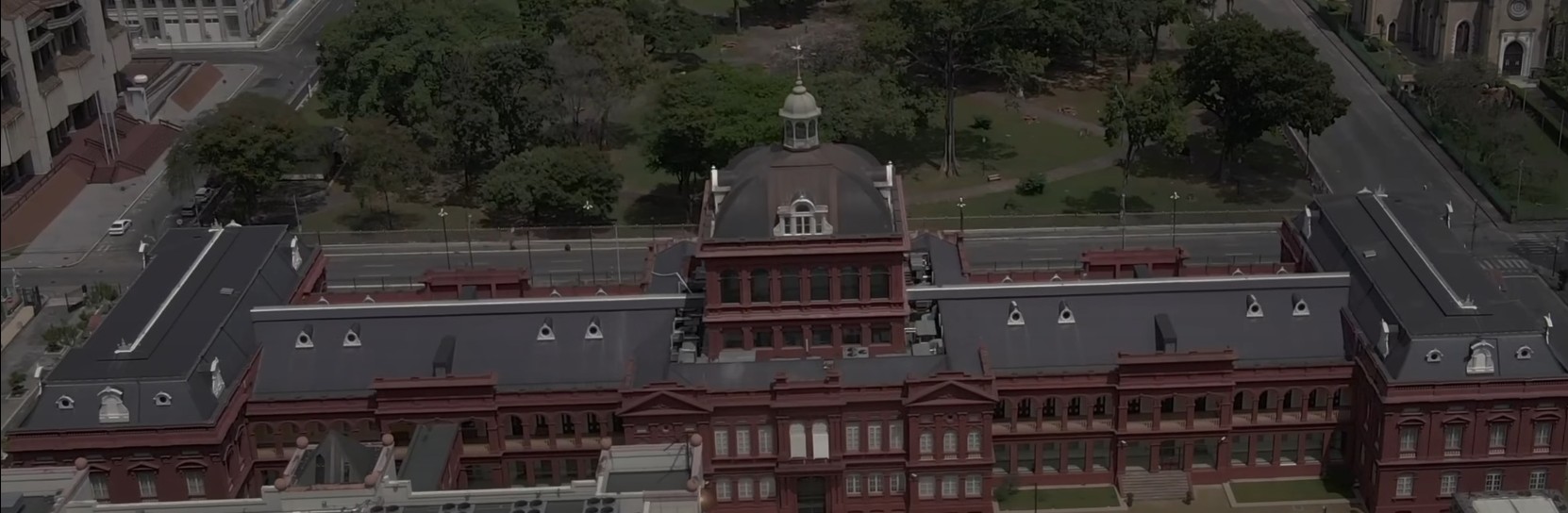
The Privy Council published its reasons on 28 January for a decision it gave from the bench on 7 November: the Auditor General, Jaiwantie Ramdass, may challenge a Cabinet-appointed investigation into her own conduct. The written judgment, [2025] UKPC 4, settles one narrow question — whether her case proceeds at all. It says nothing about the $2.6 billion the Ministry of Finance understated in the 2023 Public Accounts, and nothing about who caused the understatement.
That distinction has been lost in nine months of argument. An understatement in the accounts has been recast as a $2.6 billion hole in the nation's money, and the Auditor General as someone with something to hide. Neither description survives contact with the documents.
No money was stolen. The case before the Board was never about missing funds.
What the Privy Council case was about
September 2023 receipts, as first reported and as adjusted
- $2.598bn
- Revenue understated
- $0
- Money missing
- 54 days
- Error undetected
The gap traces to overstated debit advices from the February 2023 Electronic Cheque Clearing System malfunction, and reversal credit advices the Treasury had no record of receiving.
Source · Special Report of the Auditor General on the Public Accounts, FY2023
The case turned on a narrower question: whether Finance Minister Colm Imbert could lawfully direct an investigation into the Auditor General's handling of the accounts. The judgment opens by describing an application for judicial review “challenging the Minister’s recommendation (accepted by the Cabinet) to appoint an investigation team whose members and terms of reference were determined by him.”[6] The Auditor General, the Board noted, sought to quash only those parts of the decision concerned with “an investigation into her role and conduct.”[7] The Board found the Court of Appeal was not plainly wrong to grant her leave.[8][5] It recorded too that the understatement and “the circumstances that led to it raise serious matters of public concern warranting a full investigation”.[7] That is a statement about what still needs explaining, not a finding that money was taken.
How the error happened
Government revenue, from income tax to oil and gas royalties, is deposited into the Consolidated Fund at the Central Bank. The Treasury Division records it in the General Ledger and reconciles it daily. The financial year closes on 30 September; the Ministry must deliver the Public Accounts to the Auditor General by 31 January, and she must report to Parliament by 30 April.
In February 2023 the new Electronic Cheque Clearing System malfunctioned and produced overstated debit advices. The Central Bank issued reversal credit advices to correct them. The Treasury Division had no record of receiving those reversals, and the Inland Revenue Division did not catch the error.[3] No contract or service level agreement governed the system between the Ministry and the Central Bank. The result was adjusted September 2023 receipts of $11,588,720,312.10 against $8,990,589,550.38 as first reported, a difference of $2,598,130,761.72.[1]
Fifty-four days
The Ministry found the discrepancy on 25 March 2024 and told the Auditor General. Between 26 March and 11 April she declined the corrected figures because the statutory deadline had passed. On 12 April the Ministry sent revised accounts and asked her to reconsider; she accepted them on 16 April with a note that full verification had not been possible. On 24 April she submitted her report to Parliament without holding exit deliberations with the Ministry.[4] By then speculation had run far ahead of the facts.
The Ministry blamed delays in moving to the new system, double-booked revenue, transposed decimal points and accounts already closed. Some experienced public servants questioned that explanation. “A $2.6 billion revenue understatement is not something that goes unnoticed in a functioning accounting system,” one senior officer told me. “These are things we reconcile daily. Someone either ignored the numbers or wasn’t properly trained to spot the mistake.”
The questions follow. Why did the Treasury not catch it? Why did the Auditor General’s own staff not flag it before the accounts were finalised? If the clearing system was failing, where were the contingency measures? The Auditor General’s special report adds that the adjustment vouchers, covering $2,599,278,188.73, went unsigned by the Comptroller of Accounts.[2] The Ministry has since required monthly refund bank statements and is reviewing a draft Extranet agreement with the Central Bank.
The investigation and the courts
The Cabinet approved an investigation into the understatement on the Minister of Finance’s recommendation, with members and terms of reference set by him. The Auditor General challenged only the parts directed at her own role and conduct.[7]
How the terms of reference were drafted, and who advised on their final scope, is not set out in the published record. I have not seen the draft terms. Until they are published, that question remains open.
In its judgment, at paragraph 105, the Board records that the investigation concerns alleged errors “under and during [the Minister’s] watch.”[9] The Board ruled only on whether the Auditor General could bring her challenge. It made no finding that any public money was lost.
The terms of reference should be published in full, together with any findings of the investigation, so the public can judge the process for itself.
The Panama story
Some have claimed the $2.6 billion was stolen and wired to Panama. There is no financial record, court finding or official investigation that supports it. Government revenue sits in the Consolidated Fund at the Central Bank; the Minister cannot move it. A payment requires processing by the Treasury, authorisation by the Comptroller of Accounts and verification by the Auditor General. The error was in the reporting. The money never left the Government’s accounts.
The record shows a reporting failure, weak controls between institutions and a dispute over who may investigate whom. It does not show a theft.
Citations & source documents
- [1]Auditor General, Special Report FY2023 — The discrepancyA discrepancy of $2,598,130,761.72Adjusted receipts of $11,588,720,312.10 against $8,990,589,550.38 as originally stated: a difference of $2,598,130,761.72.
- [2]Auditor General, Special Report FY2023 — Unsigned vouchersUnsigned adjustment vouchersAdjustment vouchers covering $2,599,278,188.73 were not signed by the Comptroller of Accounts.
- [3]The Electronic Cheque Clearing System failure, February 2023The Electronic Cheque Clearing System failureOverstated debit advices; reversal credit advices not recorded as received by the Treasury Division.
- [4]Timeline, 31 January to 24 April 2024Timeline, 31 January to 24 April 2024From submission of the accounts to the report laid without exit deliberations.
- [5]Ramdass v The Minister of Finance and The Cabinet, C.A. No. P-177 of 2024The dispute moved from audit to litigationLeave for judicial review granted by the Court of Appeal and left undisturbed by the Privy Council.
- [6]Privy Council judgment, para. 1What the case was aboutThe challenge concerns the Minister’s investigation team and its terms of reference.
- [7]Privy Council judgment, para. 2A limited challengeThe Auditor General’s challenge is limited to the investigation into her own role.
- [8]Privy Council judgment, para. 6Leave upheldNo knockout blow justifying refusal of leave.
- [9]Privy Council judgment, para. 105The Minister’s watch“Under and during [the Minister’s] watch.”
Every document cited above is held on this site, with the key clauses, extracts and findings set out in full and a link to the document of record.
Cite this article
Outlets, researchers and broadcasters may quote this reporting with credit and a link to the original.
Robinson, P. (6 February 2025). "From accounting error to political scandal: the $2.6 billion controversy explained". PearceRobinson.com. https://pearcerobinson.com/reporting/two-point-six-billion-no-internal-audit
Independent reporting by Pearce Robinson. Corrections and responses may be submitted here.