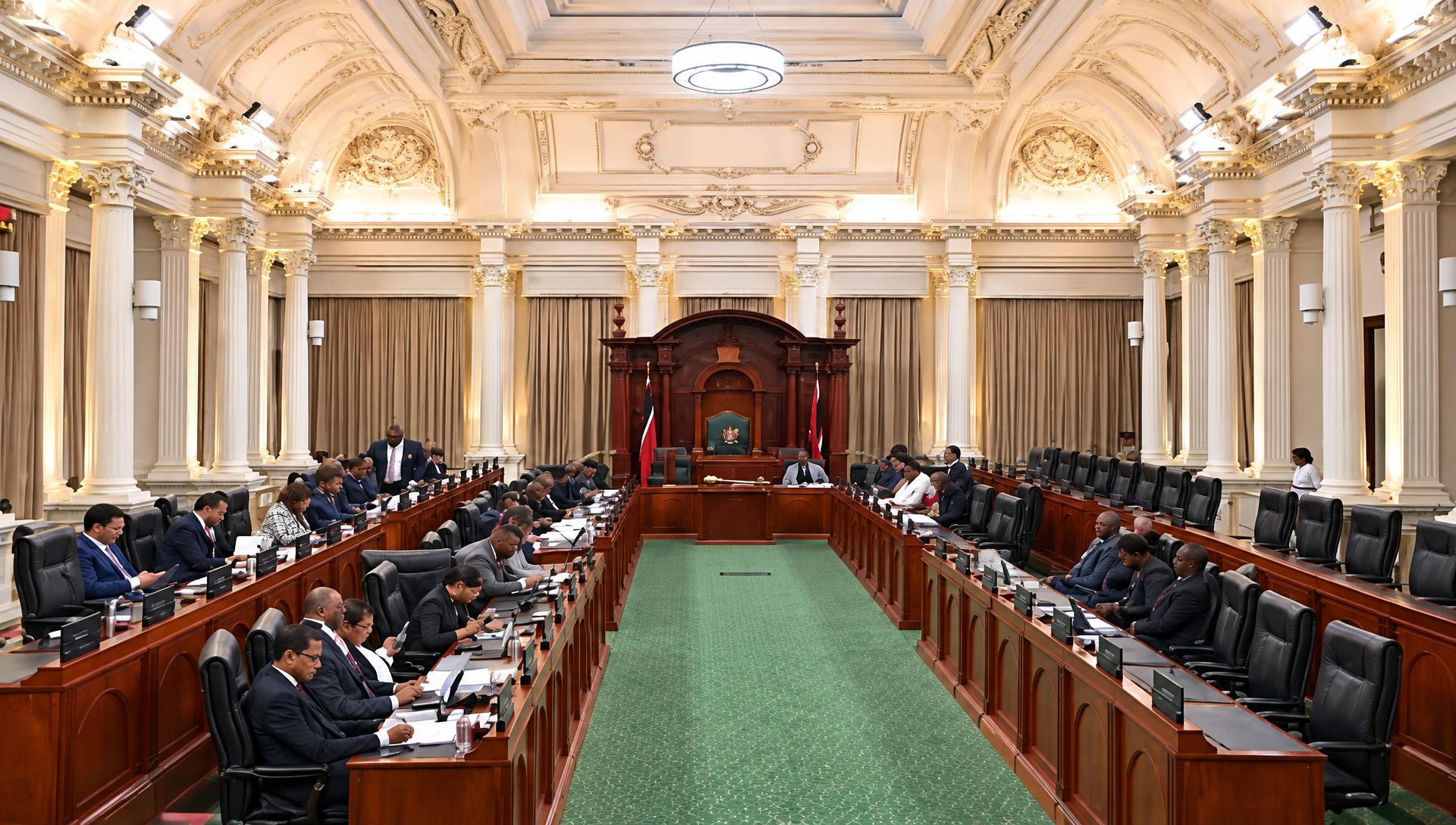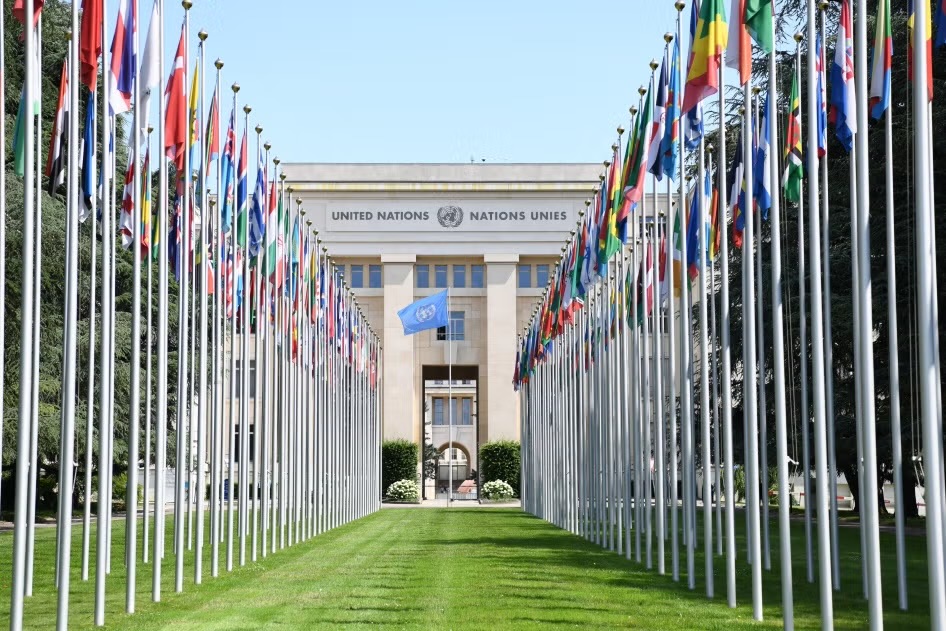
In Geneva on Monday, Trinidad and Tobago’s delegation defended the repeated use of states of emergency as foreign governments questioned how far extraordinary security powers should extend. Mexico called for limits and judicial review. Spain warned against making emergency declarations an automatic response to crime. The questions arrived while another set of institutions, in Washington, was examining military operations that have already claimed the lives of two Trinidadian men, according to a lawsuit brought by their families.1215
The pressure now reaching Port of Spain comes through different channels, each with consequences of its own. A United Nations review can produce recommendations that the Government must publicly address. American congressional scrutiny can expose the decisions behind a security operation. Litigation can test whether a killing was lawful. International responsibility can reach a supporting State where evidence establishes that its assistance contributed to unlawful conduct. None of the records examined for this investigation establishes that Trinidad and Tobago has been found responsible for war crimes, or that proceedings against it over the boat strikes have been instituted at the International Court of Justice.2101319
01 / INTERNATIONAL SCRUTINY
The warnings in Geneva
Reported recommendation · 9 November 2026
Mexico: Emergency limits
Asked that emergency measures remain exceptional, temporary and proportional, with judicial review. 2
Mexico and Spain put emergency government on the record
Trinidad and Tobago’s fourth Universal Periodic Review was held on 9 November before the UN Human Rights Council’s Working Group. The official recording lists the delegation led by Chamyantie Lal and the representatives who spoke. Susan Mohammed’s account in the Trinidad Express reports Mexico recommending that emergency measures remain exceptional, temporary and proportional, and be subject to judicial review. Spain urged the country to avoid emergency declarations as an automatic measure against insecurity and called for oversight of laws granting extraordinary powers to security forces.12
Russia called for stronger judicial protection where police exceed their authority, while Poland urged action against homicides and gang violence consistent with the International Covenant on Civil and Political Rights. The United Kingdom’s separately published statement concentrated on trafficking, violence against migrant women and girls, discrimination against LGBT+ people and the death penalty. Norway’s statement included prison conditions and excessive pretrial detention. These governments were making recommendations within a human-rights review; their interventions cannot be represented as threats of sanctions or a coordinated prosecution.234
The delegation’s response acknowledged the need for emergency measures to remain exceptional and time-bound. According to the Express report, Lal said the latest emergency had ended on 17 September 2026, that no curfew had been imposed during the recent emergencies, and that preventive detainees had access to lawyers, an independent review tribunal and the courts. She attributed a decline in the homicide rate to the Government’s legislative and policy framework. That attribution is the Government’s assessment; the review account does not establish which intervention caused the decline or whether every detention met the safeguards described.2
The recommendations were scheduled for adoption on 13 November, after this article’s filing date. Their subsequent wording and the Government’s supported or noted responses will provide a more durable record of the commitments made in Geneva. The review creates a public benchmark for conduct, although it has no power to convict ministers or strike a statute from the books.2
What an emergency does to the citizen
The legal limits go beyond whether a declaration was approved in Port of Spain. Article 4 of the International Covenant on Civil and Political Rights allows derogations during an officially proclaimed public emergency threatening the life of the nation, and only to the extent strictly required by the situation. It imposes conditions concerning other international obligations and discrimination, and requires notification through the UN Secretary-General of the provisions derogated from and the reasons. Protection against arbitrary deprivation of life and the prohibition of torture remain non-derogable.5
02 / INTERNATIONAL SCRUTINY
Four tests an emergency must survive
Proclaimed emergency
The public emergency must threaten the life of the nation and be officially proclaimed; the Covenant is not satisfied merely by calling a policy an emergency. 5
International Covenant on Civil and Political Rights · Article 4. The right against arbitrary deprivation of life survives derogation.
For residents living under exceptional policing, necessity has a practical meaning. It concerns how long a restriction lasts, how widely it operates, what an officer can seize, why a person is detained and how quickly an independent court can intervene. A fall in crime is relevant to public policy but cannot, by itself, answer whether a particular search or detention was lawful. Effective crime prevention and compliance with rights have to be examined together, using operational records rather than aggregate assurances.56
From ZOSO proposals to an Act in force
The law now governing special operations is Act No. 21 of 2026, assented to on 5 October and brought into operation on 6 October. Its provisions must be read as enacted, rather than reconstructed from objections to the earlier Zones of Special Operations proposal or the September Bill. It creates a framework for special operations in policing districts and for closed areas in which permits, cordons, curfews, searches and detention can affect ordinary life.67
Section 11 requires grounds connected to specified threats to public safety and the inability of ordinary enforcement to maintain or restore peace. Within seven days of an order, the President must deliver the specific grounds to the Speaker for presentation to the House. The House can annul the order while it remains in force, although motions seeking annulment cannot be brought within three months of one another. The adequacy of parliamentary oversight will depend partly on whether those grounds are sufficiently detailed and available to be challenged.6
Section 15 permits warrantless searches within a closed area on reasonable suspicion that an offence is being, has been or is about to be committed. Its seizure power extends to qualifying vehicles, articles and documents. The same section bars seizure of tools of a lawful trade or business and material protected by legal professional privilege, and requires search-observation safeguards and receipts for seized items. Any claim that the statute contains no protections would therefore misstate its text.6
Journalists’ confidential material and source identities are not expressly named in those exclusions. The Media Association sought protections during the Bill’s passage, and The Guardian reported the resulting press-freedom concerns internationally. The trade-tool exclusion may protect journalistic equipment, depending on interpretation; it does not expressly resolve the treatment of confidential information held on it. Whether a search, inspection or seizure would unlawfully expose a source must be assessed against the facts, the Act’s protections and constitutional and international standards. The UN Human Rights Committee has recognised a limited journalistic privilege against disclosure of sources.68924
The detention provisions also contain judicial controls. Section 17 requires an arrested person to be brought before a magistrate immediately or as soon as reasonably practicable. If further remand is justified, the magistrate may order no more than forty-eight hours before the person must be taken before a High Court judge. This is not a free-standing entitlement for police to hold everyone for forty-eight hours without judicial scrutiny. Body-worn cameras are required by section 21 only as far as available resources permit, leaving camera shortages and missing recordings as matters requiring their own explanation.6
03 / INTERNATIONAL SCRUTINY
Inside the Special Operations Act
Section 11 / Power
Closed areas
A presidential order can designate an area where specified threats and the insufficiency of ordinary enforcement justify it.
Safeguard in the law
Specific grounds must reach the Speaker within seven days. The House can annul the order; repeat annulment motions are restricted to three-month intervals.
The accountability question
Will the grounds, boundaries and evidence of necessity be available for meaningful scrutiny?
Enacted law, not an earlier Bill. Assent: 5 October 2026. Commencement: 6 October 2026. 6
Read the Act in the Document RoomThe Caribbean strikes and two families’ claim
On 27 January, Lenore Burnley and Sallycar Korasingh filed a civil complaint against the United States in the federal court in Massachusetts over the deaths of Chad Joseph and Rishi Samaroo. The complaint alleges that a US missile killed them and four others on 14 October 2025 while they were travelling from Venezuela to Trinidad. Their lawyers say the men had been fishing and working in Venezuela and were returning to their families. Those accounts are allegations advanced by the families, not findings made after a trial.1516
The claims invoke the Death on the High Seas Act and the Alien Tort Statute. The case record published by the Center for Constitutional Rights records the filing, but does not establish a final ruling on the merits. Trinidad and Tobago is not the defendant. The lawsuit nevertheless brings a Trinidadian human consequence into a legal process where the United States’ conduct, rather than its political description of the passengers, must face applicable legal tests and procedural defences.1516
04 / INTERNATIONAL SCRUTINY
The families bringing the United States to court
Chad Joseph
Named in the families’ complaint over the 14 October 2025 strike.
Rishi Samaroo
Named in the families’ complaint over the 14 October 2025 strike.
Their families allege the men were returning from Venezuela when a US missile killed them and four others. Those are pleaded allegations, not findings after trial. 15
14 October 2025
Strike alleged in the complaint
27 January 2026
Burnley v. United States filed in Massachusetts
10 November 2026
Counsel’s record inspected: no final merits ruling established
Defendant: United States. Trinidad and Tobago is not a defendant in this complaint. 16
A separate controversy concerns reports that a follow-up strike on 2 September 2025 killed survivors of an earlier attack. Legal specialists Michael Schmitt, Ryan Goodman and Tess Bridgeman analysed those reported circumstances in Just Security, including the protection of shipwrecked people and the duty to refuse unlawful orders. That incident must not be merged with the October strike involving Joseph and Samaroo. Neither their analysis nor the families’ complaint establishes Trinidad and Tobago’s operational involvement.1815
Why “war crimes” requires a legal answer
The Trump administration has framed its campaign around designated criminal and terrorist organisations. Legal specialists writing in Just Security challenge the premise that this establishes an armed conflict with cartels, and argue that the killings instead fall under the law governing the right to life. A war crime requires the relevant armed-conflict connection; an unlawful killing outside an armed conflict can still be a grave violation. Crimes against humanity have a different threshold, including a widespread or systematic attack directed against a civilian population with the required knowledge. Those classifications need evidence of the circumstances and the applicable elements, not a change of label in a press statement.1722
The Government of Trinidad and Tobago maintains that it was not involved in the strikes. Foreign Affairs Minister Sean Sobers has relied on Attorney General John Jeremie’s legal position and said there was nothing to be concerned about. His response, reported by the Trinidad Guardian, addresses the Government’s confidence in its policy. It does not disclose what assistance was supplied, whether it reached any targeting process, or which factual assumptions were examined in the advice.10
There is already public reporting about the adviser. Anna Ramdass reported in the Sunday Express on 15 March that Harish Salve KC had provided an opinion supporting a self-defence justification, and that the newspaper had seen it. The underlying opinion has not been obtained for this investigation. A lawyer’s assessment can inform ministers’ decisions, but the scope of the questions asked, the facts supplied and the treatment of particular operations remain essential to assessing its reach. An opinion is not a judgment clearing a State of responsibility.11
The pressure has now reached the man who directed the campaign. On 10 November, facing eight articles of impeachment introduced by Representative Thomas Massie, Defense Secretary Pete Hegseth told a Pentagon news conference that the operations in Iran, against the cartels, against Nicolás Maduro and in Yemen were each “a lawful operation ordered by the commander-in-chief, then ordered by myself, notified to Congress, and executed by American warriors who did their jobs.” “We sank the boats carrying poison into our communities,” he said. “These are not high crimes.” By placing the President’s orders at the head of the chain, Hegseth set out the line of authority that congressional investigators, and any later legal inquiry into the boat strikes, would have to examine. His insistence that every strike was lawful remains his defence; no court or congressional body has ruled on it.25

When a partner’s assistance becomes its own legal problem
In an April statement published by the Washington Office on Latin America, 125 organisations called on States to stop facilitating what they described as US extrajudicial killings. They identified intelligence sharing, access to military bases and logistical support as forms of cooperation that could expose a third State to responsibility where they facilitate identifying, tracking or targeting vessels. Their warning is an advocacy assessment grounded in international law; it does not prove that Trinidad and Tobago supplied such assistance to an unlawful operation.12
The central rule is Article 16 of the International Law Commission’s articles on State responsibility. A State assisting another State in an internationally wrongful act can bear responsibility where it acts with knowledge of the circumstances and the act would also have been wrongful if committed by the assisting State. The commentary examines assistance intended to facilitate the conduct and an actual contribution to it. The articles are not themselves a ratified treaty, and the precise mental element remains debated, as Sir Michael Wood’s UN lecture explains. Applying the rule requires the underlying wrong, the contribution and the required knowledge to be established.1314
05 / INTERNATIONAL SCRUTINY
Where assistance can become responsibility
Article 16 requires evidence of assistance, knowledge and an underlying wrongful act. These are analytical questions, not a scored forecast of Trinidad and Tobago’s liability. 13
Political endorsement
A speech or vote may carry diplomatic consequences. It does not on its own prove operational assistance or criminal participation. 13
Evidence to examine
Public statements and voting records
For Trinidad and Tobago, the documents that could answer those questions include access agreements, intelligence tasking, flight and vessel logs, restrictions on the use of shared information, legal assessments and communications after warnings of unlawful conduct. A general security partnership does not demonstrate that any one strike relied on local assistance. If operational support did contribute, however, a statement that local personnel did not fire the weapon would leave the assistance question unanswered. The available public record does not establish that chain.1213
The ICJ can examine States, but only with jurisdiction
06 / INTERNATIONAL SCRUTINY
Five institutions with different powers
ICJ: Responsibility of States
Mandate
Decides legal disputes between States; can order remedies where jurisdiction exists.
Threshold
A consenting jurisdictional basis and an admissible dispute are required.
Record at filing
These sources establish no ICJ case against T&T over the strikes.
The International Court of Justice settles disputes between States. It does not indict officials, and individuals cannot file contentious cases there. A claim concerning assistance to unlawful military conduct would need an applicable legal obligation, an admissible dispute and a jurisdictional basis founded on the States’ consent. Membership of the United Nations alone does not give the Court unrestricted authority over every dispute. No such basis for a boat-strike case against Trinidad and Tobago is established by the sources examined here.19
Nicaragua’s case against Germany over assistance to Israel shows how support supplied by a third State can reach the Court, while also showing the obstacles. In its order of 30 April 2024, the ICJ declined the provisional measures requested on the circumstances before it. It recalled humanitarian-law and genocide-prevention obligations and the risks associated with arms transfers, but expressly left jurisdiction, admissibility and the merits undecided. That order cannot be cited as a finding that Germany was complicit, or as a ruling against Trinidad and Tobago.20
07 / INTERNATIONAL SCRUTINY
What the ICJ actually said
30 April 2024 · provisional-measures order
Requested provisional measures declined on the circumstances then before the Court.
The Court recalled humanitarian-law obligations and the risk of arms being used in violations.
Jurisdiction, admissibility and the merits were expressly left undecided. The order does not establish Germany’s complicity or Trinidad and Tobago’s responsibility. 20
The Court’s 19 July 2024 advisory opinion on the Occupied Palestinian Territory addressed a further obligation: States must not recognise the situation arising from Israel’s unlawful presence as legal, or render aid or assistance in maintaining it. The opinion concerns that specific unlawful situation. It does not make every diplomatic exchange or commercial relationship with Israel unlawful, and it does not establish that Trinidad and Tobago has maintained the situation through its own conduct. Any application to a particular relationship would require identifying what was supplied, its use and the governing obligation.21
The ICC asks a different question
The International Criminal Court prosecutes individuals for crimes within the Rome Statute. Trinidad and Tobago ratified the Statute on 6 April 1999. That membership brings obligations which cannot be removed by abstaining on a General Assembly resolution about the Court. It also means that relevant conduct involving the territory, a registered vessel or an accused national can raise jurisdictional questions under Article 12, subject to the Statute’s other requirements.2322
The Trinidadian nationality of a victim alone does not establish ordinary ICC jurisdiction. The relevant territorial conduct, registration of a vessel, nationality of an accused, or another recognised route has to be established. Individual assistance liability under Article 25 has its own requirements: paragraph 3(c) addresses aiding or abetting for the purpose of facilitating a crime, while paragraph 3(d) separately concerns intentional contributions to group crimes. A minister’s political endorsement is not evidence sufficient to satisfy those elements. These sources establish no ICC charge against a Trinidad and Tobago official over the strikes.2217
The records Port of Spain should be able to explain
08 / INTERNATIONAL SCRUTINY
The account the public is entitled to seek
Oversight can disclose safeguards and legal principles while protecting legitimately confidential operations and personal information. 613
The full on-site evidence recordThe most immediate consequence for Trinidad and Tobago is a demand for an account that can survive independent scrutiny. In Geneva, that means responding to recommendations with measurable safeguards: reasons for closed-area orders, prompt detention reviews, access to lawyers, search records and meaningful protection of confidential sources. In Washington, it means being able to identify what security cooperation involved and the limits imposed on its use. Some documents may legitimately remain confidential or privileged, but the legal principles, oversight arrangements and safeguards can be explained without disclosing every operational detail.261013
The supplied research briefs also describe representations to Ireland, the Commonwealth Lawyers Association and press-freedom organisations. Original acknowledgements were not included among the files available for this article, so their precise wording and any subsequent institutional action have not been independently verified here. They cannot establish that a foreign ministry, legal association or regional human-rights office has opened an investigation. Ireland’s participation in the UN review, recorded in the official speaker list, likewise cannot be attributed to private correspondence without evidence.1
The Government confronts serious crime and has a duty to protect the public. Its diplomatic partners can recognise that duty while insisting that extraordinary powers remain limited and reviewable. Security cooperation abroad carries the same need for an account of what the State authorised and what it knew. The warnings from Mexico and Spain have already entered the public record. Whether Caribbean cooperation creates a further legal exposure will depend on the documents behind the operations, and on facts that political reassurance cannot supply.2513
Citations & source document
- [1]UN Web TV / UNOG — Trinidad and Tobago Review — 53rd session of the Universal Periodic ReviewTrinidad and Tobago Review — 53rd session of the Universal Periodic ReviewConfirms the fourth review, date, delegation and participating speakers. Country-specific recommendations below are attributed to Susan Mohammed’s contemporaneous report rather than presented as independently transcribed quotations.
- [2]Susan Mohammed · Trinidad Express — T&T defends SOEsT&T defends SOEsReports Mexico’s request for exceptional, temporary, proportional emergency measures subject to judicial review; Spain’s opposition to automatic emergency declarations and call for oversight; Russia’s judicial-protection recommendation; Poland’s ICCPR recommendation. Reports the Government’s safeguards, its account that the latest emergency ended 17 September, and adoption scheduled for 13 November.
- [3]UK Mission in Geneva — 53rd UPR: UK statement on Trinidad and Tobago53rd UPR: UK statement on Trinidad and TobagoThe UK’s published statement concerns gender-based violence and trafficking, LGBT+ discrimination and the death penalty. It is not a statement threatening proceedings over the Caribbean strikes.
- [4]Norway in Geneva — Recommendations to Trinidad and TobagoRecommendations to Trinidad and TobagoPublished recommendations address the death penalty, torture safeguards, pretrial detention, gender-based violence and same-sex criminalisation. The statement preceded the 10 November Jason Jones judgment.
- [5]OHCHR — International Covenant on Civil and Political RightsInternational Covenant on Civil and Political RightsArticle 4 permits derogation only in an officially proclaimed emergency threatening the life of the nation, to the extent strictly required, with consistency and non-discrimination conditions and international notification. Article 6 is non-derogable. Articles 9, 17 and 19 protect liberty, privacy and expression.
- [6]Parliament of Trinidad and Tobago — Special Operations Act, 2026 — Act No. 21Special Operations Act, 2026 — Act No. 21Enacted text inspected through the publication’s hosted copy. Section 11 requires grounds for a closed-area order and presentation to the Speaker within seven days. Section 15 sets a reasonable-suspicion search threshold and bars seizure of tools of lawful trade and legally privileged material. Section 17 requires prompt magistrate review, with a maximum 48-hour magistrate remand followed by High Court review. Section 21 qualifies body-camera use by available resources.
- [7]Parliament of Trinidad and Tobago — Special Operations Act — parliamentary publication recordSpecial Operations Act — parliamentary publication recordIdentifies the enacted Act. The January Zones of Special Operations proposal and September Bill must not be quoted as if each were the final law.
- [8]Natricia Duncan · The Guardian — Outcry after passing of police bill that could threaten press freedomOutcry after passing of police bill that could threaten press freedomInternational reporting of concerns about journalistic material and sources. Cited as reporting and criticism, not a judicial finding that the Act violates rights.
- [9]Trinidad Guardian — MATT wants journalists’ sources and tools protectedMATT wants journalists’ sources and tools protectedRecords requests for explicit journalistic protections during the Bill’s passage; the enacted section 15(4) is checked separately.
- [10]Dareece Polo · Trinidad Guardian — Sobers dismisses concerns over possible US congressional scrutinySobers dismisses concerns over possible US congressional scrutinyReports the Minister’s reliance on the Attorney General’s position and the Government’s denial of involvement in strikes. Reports bipartisan Armed Services inquiries; does not establish a congressional finding against Trinidad and Tobago. The claim that the adviser remained unnamed is not adopted because March Express reporting identifies Harish Salve.
- [11]Anna Ramdass · Trinidad Express — Legal opinion clears T&T over US drug boat strikesLegal opinion clears T&T over US drug boat strikesIdentifies Harish Salve KC as the adviser and reports a self-defence justification. The publicly indexed report was inspected; the underlying opinion was not obtained. Its headline describes an opinion, not a court’s clearance.
- [12]125 organisations · published by WOLA — An open call to all States to stop facilitating US extrajudicial killingsAn open call to all States to stop facilitating US extrajudicial killingsThe signatories argue that operational assistance facilitating vessel identification, tracking and targeting can expose third States to responsibility. This is an advocacy/legal assessment, not an adjudicated finding against T&T.
- [13]United Nations · ILC materials on State responsibility — Article 16: aid or assistanceArticle 16: aid or assistanceRequires assistance with knowledge of the circumstances and an act that would also be wrongful if committed by the assisting State. Commentary discusses facilitation, actual contribution and intention. The ILC articles are not themselves a ratified treaty; the precise mental element is debated.
- [14]Sir Michael Wood · UN Audiovisual Library — State responsibility for assistance in a wrongful actState responsibility for assistance in a wrongful actExplains the status and contested aspects of the ILC assistance rule. Knowledge, contribution and legal character require analysis; a political alliance is not a substitute for evidence.
- [15]Plaintiffs · US District Court, District of Massachusetts — Burnley v. United States — complaintBurnley v. United States — complaintAlleges that Chad Joseph and Rishi Samaroo were killed with four others on 14 October 2025 while returning from Venezuela. The defendant is the United States, not T&T. Wrongful-death and extrajudicial-killing allegations are pleaded claims, not findings.
- [16]Center for Constitutional Rights — Burnley v. United States — counsel’s case recordBurnley v. United States — counsel’s case recordCounsel’s page records the filing and identifies the Death on the High Seas Act and Alien Tort Statute claims. It does not supply a final merits ruling; counsel’s account of the men’s journey is attributed.
- [17]Tracey Begley, Benjamin R. Farley and Sarah Harrison · Just Security — International accountability for US crimes in the Caribbean and PacificInternational accountability for US crimes in the Caribbean and PacificLegal specialists analyse domestic, universal-jurisdiction, Inter-American, ICJ and ICC routes and their obstacles. Their conclusion that the strikes are unlawful and potentially crimes against humanity is attributed legal analysis.
- [18]Michael Schmitt, Ryan Goodman and Tess Bridgeman · Just Security — Unlawful orders and killing shipwrecked boat-strike survivorsUnlawful orders and killing shipwrecked boat-strike survivorsExamines reported facts of the September 2, 2025 incident, separately from the October 14 strike involving Joseph and Samaroo. Analysis of an alleged follow-up attack is not proof of T&T involvement.
- [19]International Court of Justice — Contentious jurisdictionContentious jurisdictionOnly States can bring contentious cases. The Court requires a jurisdictional basis founded on consent. It does not indict officials or hear private criminal complaints.
- [20]International Court of Justice — Nicaragua v. Germany — Order of 30 April 2024Nicaragua v. Germany — Order of 30 April 2024Declined the requested provisional measures on the circumstances then before it; recalled humanitarian and genocide-prevention obligations and arms-transfer risks. Paragraph 25 expressly leaves jurisdiction, admissibility and merits undecided. This is a different case, not a ruling against T&T.
- [21]International Court of Justice · reproduced by UN — Occupied Palestinian Territory — advisory opinionOccupied Palestinian Territory — advisory opinionStates are obliged not to recognise the situation arising from Israel’s unlawful presence as legal and not to render aid or assistance in maintaining it. The advisory opinion identifies obligations in a specific situation; it does not declare every diplomatic or commercial relationship with Israel unlawful.
- [22]International Criminal Court — Rome Statute — consolidated reference textRome Statute — consolidated reference textIndividual criminal liability requires a statutory crime, jurisdiction, admissibility and mode of participation. Article 12 refers to territory, vessel registration and nationality of an accused, not merely victims’ nationality. Article 25(3)(c) requires assistance for the purpose of facilitating the crime; (d) separately addresses intentional contributions to group crimes. Consolidation incorporates amendments; amendment acceptance must be checked where relevant.
- [23]ICC Assembly of States Parties — Trinidad and Tobago — State Party recordTrinidad and Tobago — State Party recordTrinidad and Tobago deposited ratification on 6 April 1999. A General Assembly abstention does not end Rome Statute membership or cooperation obligations.
- [24]UN Human Rights Committee — General Comment No. 34General Comment No. 34Recognises a limited journalistic privilege not to disclose information sources. Helps frame source protection; does not by itself adjudicate this Act.
- [25]CNBC-TV18 (video) · ABC News — Hegseth responds to questions over military actions amid impeachment threatHegseth responds to questions over military actions amid impeachment threatRecords Hegseth saying each operation named in the impeachment articles was lawful and ordered by the commander-in-chief. His account of legality is a defence position, not a finding by any court or Congress.
Every document cited above is held on this site, with the key clauses, extracts and findings set out in full and a link to the document of record.
Cite this article
Outlets, researchers and broadcasters may quote this reporting with credit and a link to the original.
Robinson, P. (10 November 2026). "War-crimes allegations, emergency powers and the legal risks facing Trinidad and Tobago". PearceRobinson.com. https://pearcerobinson.com/reporting/trinidad-war-crimes-risk-icj-emergency-powers-international-scrutiny
Sources
- 1UN Web TV / UNOG — Trinidad and Tobago Review — 53rd session of the Universal Periodic Review
- 2Susan Mohammed · Trinidad Express — T&T defends SOEs
- 3UK Mission in Geneva — 53rd UPR: UK statement on Trinidad and Tobago
- 4Norway in Geneva — Recommendations to Trinidad and Tobago
- 5OHCHR — International Covenant on Civil and Political Rights
- 6Parliament of Trinidad and Tobago — Special Operations Act, 2026 — Act No. 21
- 7Parliament of Trinidad and Tobago — Special Operations Act — parliamentary publication record
- 8Natricia Duncan · The Guardian — Outcry after passing of police bill that could threaten press freedom
- 9Trinidad Guardian — MATT wants journalists’ sources and tools protected
- 10Dareece Polo · Trinidad Guardian — Sobers dismisses concerns over possible US congressional scrutiny
- 11Anna Ramdass · Trinidad Express — Legal opinion clears T&T over US drug boat strikes
- 12125 organisations · published by WOLA — An open call to all States to stop facilitating US extrajudicial killings
- 13United Nations · ILC materials on State responsibility — Article 16: aid or assistance
- 14Sir Michael Wood · UN Audiovisual Library — State responsibility for assistance in a wrongful act
- 15Plaintiffs · US District Court, District of Massachusetts — Burnley v. United States — complaint
- 16Center for Constitutional Rights — Burnley v. United States — counsel’s case record
- 17Tracey Begley, Benjamin R. Farley and Sarah Harrison · Just Security — International accountability for US crimes in the Caribbean and Pacific
- 18Michael Schmitt, Ryan Goodman and Tess Bridgeman · Just Security — Unlawful orders and killing shipwrecked boat-strike survivors
- 19International Court of Justice — Contentious jurisdiction
- 20International Court of Justice — Nicaragua v. Germany — Order of 30 April 2024
- 21International Court of Justice · reproduced by UN — Occupied Palestinian Territory — advisory opinion
- 22International Criminal Court — Rome Statute — consolidated reference text
- 23ICC Assembly of States Parties — Trinidad and Tobago — State Party record
- 24UN Human Rights Committee — General Comment No. 34
- 25CNBC-TV18 (video) · ABC News — Hegseth responds to questions over military actions amid impeachment threat
Independent reporting by Pearce Robinson. Corrections and responses may be submitted here.