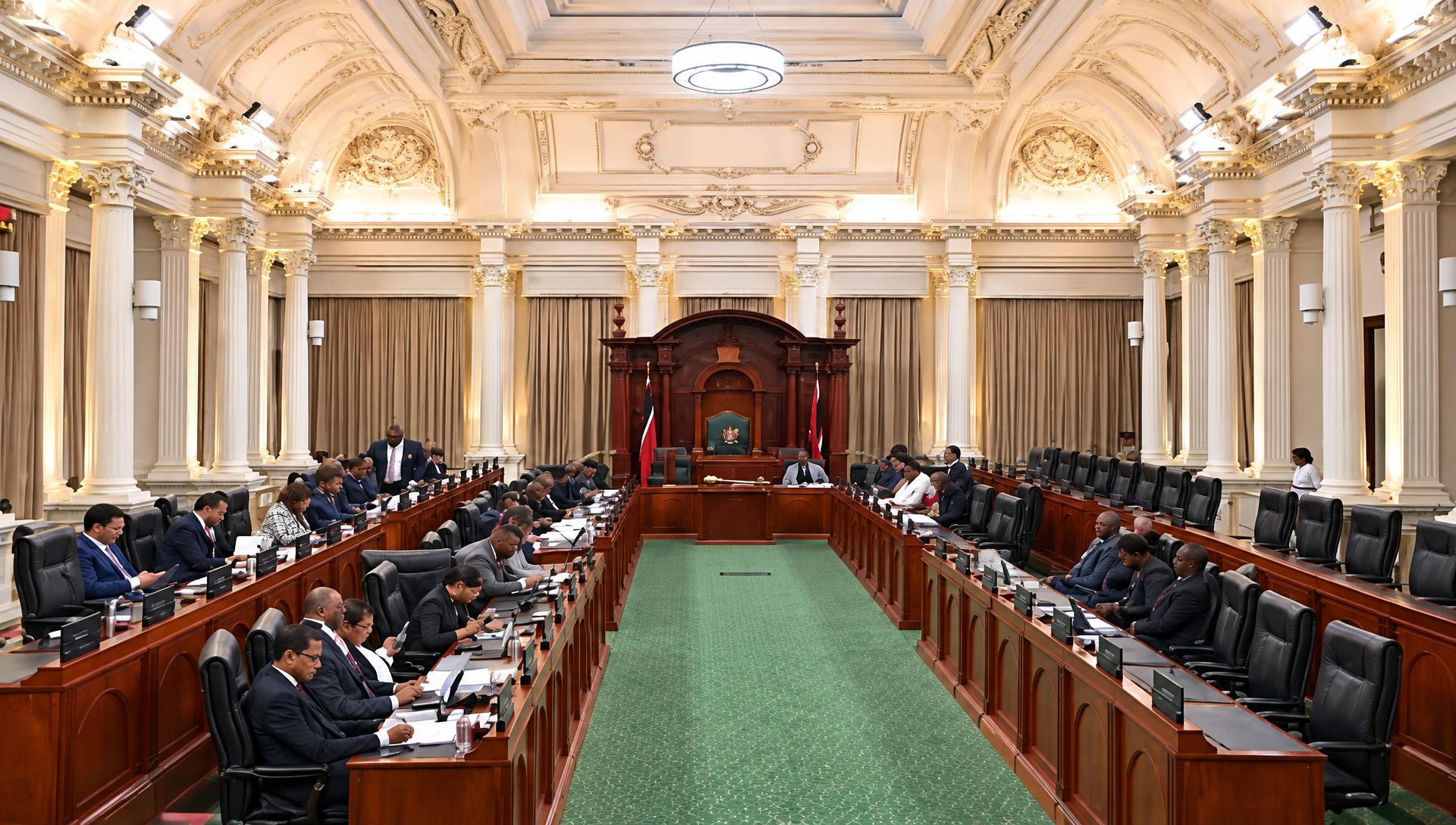
When the Privy Council ruled on Tuesday that Trinidad and Tobago could no longer criminalise private sexual intimacy between consenting adults of the same sex, much of the coverage reached for a familiar story: a British court clearing away a British colonial law. The judgment itself tells a more uncomfortable one. The provisions that Jason Jones challenged were written in Port of Spain in 1986, a decade after the country became a republic, and they did more than preserve an old offence. Parliament rebuilt the law of sexual offences, kept the prohibition on private intimacy and raised the penalties attached to it.1
Five justices of the Judicial Committee were unanimous. They allowed Jones’s appeal, dismissed the Attorney General’s cross-appeal, and held that sections 13 and 16 of the Sexual Offences Act 1986 could neither shelter behind the Constitution’s savings clause nor be justified under its test of what is reasonable in a society that respects individual rights. The Board has not yet issued its final order on how the provisions will be modified, and will first receive written submissions from both sides.12
A law made at home
England and Wales began dismantling their own prohibition in 1967, when private acts between consenting men over 21 were partly decriminalised, although that reform did not extend to the colonies and stopped well short of equality. In Trinidad and Tobago the question before the courts was narrower and more technical: whether the 1986 provisions were simply the old law in a new form, and therefore protected as law that existed before the 1976 Constitution came into force.191
The judgment sets the two side by side. Under the 1925 Offences Against the Person Act, as it stood in 1976, buggery carried a maximum of five years’ imprisonment and gross indecency between men two. The 1986 Act doubled the maximum for buggery between adults to ten years, introduced a new offence of serious indecency carrying five years, and for the first time brought women within its reach, while exempting private acts between a consenting man and woman. In 2012 the Children Act raised the maximum for buggery to twenty-five years.1
01 / THE EVIDENCE
The same subject. A different law.
A colonial inheritance became a domestic replacement. The distinction decides whether constitutional scrutiny can be shut out.
STATUTORY MAXIMA · YEARS OF IMPRISONMENT
1925 law as amended; provisions in force at the 1976 Constitution. Judgment §11. 1
Inside the 1986 debate
The most detailed account of how legislators approached the Bill comes from Yasmin Tambiah, whose 2009 study for the University of the West Indies drew on transcripts of the debates supplied to her by Parliament. She dates the second reading in the House to between 21 February and 5 March 1986, and in the Senate to 4 November. The Act came into force on 14 November that year.1112
Tambiah records the Minister responsible cautioning the House that the criminal law should not try to punish everything considered immoral, even as the Bill retained the prohibition on buggery. She also notes that the Law Reform Commission and the Bar Council had recommended a different course. Her account is drawn from those transcripts; I have not examined the original records myself, and the quotations here are hers.11
The judgment reaches its own view of what Parliament did. It quotes Justice of Appeal Vasheist Kokaram’s description of a legislature that chose to break with the past and modernise the law of sexual offences, and at paragraphs 37 and 38 concludes that the 1986 Act was a comprehensive new regime rather than a revision of the old one. That finding proved decisive, because a law the country wrote for itself cannot claim the protection the Constitution gives to laws it inherited.1
02 / THE EVIDENCE
A reform with a contradiction at its centre.
PRIMARY COURT RECORD · §§ 24, 37–38
The 1986 Act was a comprehensive replacement — not merely an old offence surviving unchanged.
The Board quotes Kokaram JA’s account of Parliament’s modernising choice, then evaluates the legislation’s character independently. That is a legal conclusion about the regime, not proof of any legislator’s hidden motive. 1
The man behind the claim
Jones was born in Port of Spain in 1964 and has been openly gay since he was sixteen. He left for England in 1996, returned to live in Trinidad between 2010 and 2014, and then left again. He filed his constitutional claim on 23 February 2017. In his affidavit, which the judgment summarises, he described almost daily abuse, avoiding public transport for fear of his safety, being attacked while performing as a singer and living with the knowledge that he could be arrested. The Attorney General filed no evidence in reply, and his account went unchallenged.14
Prosecutions under the provisions were rare, but the courts accepted that the law’s existence shaped how Jones was treated and how he lived. Speaking after the ruling, he told reporters from the Associated Press and The Guardian what the decade-long case had cost him and what the result meant.68
03 / THE EVIDENCE
A claim, a reversal, a final appeal.
23 FEB 2017
The challenge begins
Jones files a constitutional claim. His affidavit records abuse, attacks and fear of arrest. 4
The filing date is 23 February 2017; campaign duration and court duration are not the same measure.
From the High Court to London
Justice Devindra Rampersad found in Jones’s favour in April 2018 and, that September, modified the provisions so they no longer applied to consenting adults. In March 2025 the Court of Appeal reversed him by a majority. Justices of Appeal Bereaux and Pemberton held that the savings clause protected the substance of the earlier law; Justice Kokaram dissented. All three agreed, however, that the provisions could not be justified where they went beyond the old law, and the majority restored the earlier penalties of five years for buggery and two for gross indecency.14
The Privy Council rejected the majority’s reasoning on the savings clause for eight separate reasons. Section 6(2) of the Constitution, it held, protects existing law that has been repealed and re-enacted with modifications, and must be read narrowly. Where Parliament has reviewed a body of law afresh and replaced it, the purpose of that protection has largely been served, and the new law must answer to the fundamental rights in the Constitution like any other.1
The State’s second line of defence rested on section 13 of the Constitution, which allows Parliament, by a special majority, to pass laws that are inconsistent with fundamental rights. The 1986 Act was passed that way. But the section still requires such a law to be reasonably justifiable, and the Attorney General argued that this should be judged by the standards of 1986. The Board disagreed. Rights must be practical and effective in the present, it said, and the democratic weight of a vote taken four decades ago, by a Parliament elected by a substantially different electorate, diminishes with time.1
No evidence for tradition
On the question of justification itself, the State’s case was thin. The Attorney General filed no evidence and relied instead on the argument that the provisions reflected traditional laws of long standing. The Board said that an argument from tradition would need evidence of how strong that tradition was and whether it remained consistent with the values of society today. None was put before the court.1
Even if preserving such a tradition were accepted as a legitimate aim, the Board held, the interference with Jones’s private life was too severe to be justified. The judgment describes the ability to form a deep connection with another person through an intimate and loving relationship as a vital interest for all human beings, and recognises that Jones’s relationship with another man engages the Constitution’s protection of family life.1
04 / THE EVIDENCE
Put each defence beside the judgment.
STATE’S CASE · SUMMARY
The 1986 provisions re-enacted the earlier offences with modifications, so the savings provision protected their earlier substance.
JONES’S POSITION · SUMMARY
Parliament created a new, comprehensive regime. Similarity of subject matter does not make replacement legislation saved law.
BOARD’S FINDING · SUMMARY
The Board agreed that these were new provisions, not a protected repeal-and-re-enactment. It gave eight reasons, including the context, statutory categories and narrow construction of savings provisions.
COURT EXTRACT · §§ 35–51
“They did not repeal and re-enact sections 60–62 with modifications.”
What happens next
The Board has said its provisional view is that Justice Rampersad’s 2018 order should stand, describing it as an elegant solution that makes clear there is no crime where the parties are consenting adults. Jones’s counsel, Anand Ramlogan, has asked the Board instead to strike sections 13 and 16 out entirely, and both sides will make further written submissions before a final order is made.12
The ruling does not alter the law on non-consensual sexual offences or offences against children, and it says nothing about marriage. Its reach is the criminal law’s treatment of consenting adults in private, and on that question it is unequivocal.1
05 / THE EVIDENCE
A victory is not every possible remedy.
- Jones’s appeal succeeds unanimously.
- The Attorney General’s cross-appeal is dismissed.
- The 1986 provisions are not protected as saved law.
- The relevant criminalisation fails reasonable justification.
Further submissions on consent, age and the final order remain. The Board’s provisional view favours the High Court remedy. §§ 85–89. 1
Across the Caribbean
Jones has predicted a domino effect across countries that still send their final appeals to the Privy Council. Legally, the judgment binds only Trinidad and Tobago, and each country in the region has its own statutes and its own constitutional history. Guyana, which still criminalises sex between men, takes its final appeals to the Caribbean Court of Justice.817
According to profiles published by the Human Dignity Trust in October, similar provisions remain on the books in Jamaica, Guyana, Grenada and Saint Vincent and the Grenadines, where a constitutional challenge failed in 2024. Courts in Antigua and Barbuda, Saint Kitts and Nevis, and Barbados struck down their laws in 2022, and Saint Lucia followed in 2025. Where the old laws survive, they are rarely enforced, but they have not been repealed.1314151618
06 / THE EVIDENCE
Influence is not automatic repeal.
A judgment about Trinidad and Tobago can inform other litigation. Each country still has its own statute, constitution and court.
Constitutional victory
Trinidad and Tobago
Final order pending
Precise remedy remains subject to submissions
Today’s judgment rejects criminalisation of private consensual adult same-sex intimacy. Precise remedial wording remains subject to submissions. 1
Final appellate court: Privy Council
Legal snapshot checked 10 November 2026. Country-law details are attributed to Human Dignity Trust’s dated profiles. No regional enforcement total is inferred. Successful challenges elsewhere preceded this judgment. 18
A question for this country
CNN, the BBC, Reuters, the Associated Press and The Guardian have all reported the ruling, and Derek Achong of the Trinidad Guardian has followed the case through the local courts. The arguments themselves can be heard in full in the Privy Council’s recordings of the July hearing, and the judgment is reproduced in the Document Room alongside the other sources cited here.5678910
07 / THE EVIDENCE
The arguments, in the court’s own recording.
Official appeal hearing, 8 July 2026 — not the November judgment delivery. No duration or time-coded claim is supplied without verification. 3
Much will be said about Britain’s role in exporting these laws, and it is a fair point. But the Board’s central finding is that the law Jones challenged was Trinidad and Tobago’s own, written by its Parliament after independence and defended by its Attorney General without evidence. The Constitution that Parliament adopted in 1976 promised every citizen dignity and respect for private and family life. It took a citizen who had twice left the country to hold the State to that promise.1
08 / THE EVIDENCE
The source record stays open.
[1] Judicial Committee of the Privy Council1
Jason Jones judgment [2026] UKPC 38
The unanimous judgment allows Jones’s appeal and dismisses the Attorney General’s cross-appeal. The 1986 regime is new law, not protected by section 6. The restrictions fail the section 13 justification test. Final remedial wording remains subject to submissions.
[2] Judicial Committee of the Privy Council2
Official press summary
Summarises both constitutional issues, the unanimous result and the further submissions required before the final order. The summary is explanatory, not the authoritative reasons.
[3] Judicial Committee of the Privy Council3
Case archive and official hearing recordings
Lists the parties, five justices, written arguments, joint statement of facts and issues, and morning and afternoon hearing videos. Recordings are hearings, not footage of the November judgment delivery.
[4] Parties to JCPC/2025/00954
Statement of Facts and Issues
The claim was filed on 23 February 2017. The High Court ruled on 12 April 2018 and made its modifying order on 20 September 2018.
[11] Yasmin Tambiah · UWI Caribbean Review of Gender Studies, Issue 311
Creating (Im)moral Citizens: Gender, Sexuality and Lawmaking in Trinidad and Tobago, 1986
Historical scholarship based on parliamentary transcripts supplied to the researcher. Records House debate from 21 February to 5 March 1986 and Senate debate on 4 November. Describes reform recommendations and the tension between public decency and private conduct. This publication has not independently inspected those original transcripts.
[12] Trinidad and Tobago Digital Law Library12
Sexual Offences Act, Chapter 11:28
Identifies the Act’s repeal-and-replace long title and commencement on 14 November 1986. Historical offence wording and penalties in this article are drawn from the judgment, not represented as a current consolidated post-judgment statute.
[19] UK legislation.gov.uk19
Sexual Offences Act 1967
The original section 1 partially decriminalised private consensual male same-sex acts in England and Wales, subject to age and other restrictions. It did not simultaneously change all UK or overseas laws.
Citations & source document
- [1]Judicial Committee of the Privy Council — Jason Jones judgment [2026] UKPC 38The unanimous ruling and its limitsThe unanimous judgment allows Jones’s appeal and dismisses the Attorney General’s cross-appeal. The 1986 regime is new law, not protected by section 6. The restrictions fail the section 13 justification test. Final remedial wording remains subject to submissions.
- [2]Judicial Committee of the Privy Council — Official press summaryThe official explanatory summarySummarises both constitutional issues, the unanimous result and the further submissions required before the final order. The summary is explanatory, not the authoritative reasons.
- [3]Judicial Committee of the Privy Council — Case archive and official hearing recordingsThe appeal archiveLists the parties, five justices, written arguments, joint statement of facts and issues, and morning and afternoon hearing videos. Recordings are hearings, not footage of the November judgment delivery.
- [4]Parties to JCPC/2025/0095 — Statement of Facts and IssuesThe court chronologyThe claim was filed on 23 February 2017. The High Court ruled on 12 April 2018 and made its modifying order on 20 September 2018.
- [5]Michael Rios, CNN; syndicated by KESQ — A gay sex ban is overturned in Trinidad and TobagoInternational and local coverage reviewedCNN interviews Jones and attorney Ria Mohammed and examines colonial origins, the 1986 changes and final appellate jurisdiction. Its photographs are licensed agency material, not reproduced here.
- [6]Associated Press — Top UK appeals court rules gay sex not a crime in Trinidad and TobagoInternational and local coverage reviewedReports the ruling, Jones’s departure after discrimination and violence, opposition to the challenge and regional consequences.
- [7]Reuters; syndicated by Devdiscourse — UK court overturns Trinidad and Tobago law criminalising homosexual sexInternational and local coverage reviewedReports the decision and Jones’s response. Says the Attorney General’s office did not immediately respond to Reuters’s request for comment; that was Reuters’s approach, not this publication’s.
- [8]The Guardian — Activist wins 10-year fight against homophobic Trinidad and Tobago lawsInternational and local coverage reviewedReports Jones’s response, his lawyers’ statement and the possible regional influence of the decision. Jones’s domino-effect assessment is an activist’s expectation, not an order changing other countries’ laws.
- [9]BBC News — Josh Parry — Anti-homosexuality laws in Trinidad and Tobago overturnedInternational and local coverage reviewedReports the unanimous victory, the savings clause argument and the international significance. The filing date in the joint statement is used here rather than a rounded campaign duration.
- [10]Trinidad Guardian — Derek Achong — Privy Council rejects criminalisation of consensual gay sexInternational and local coverage reviewedLocal court reporting covers the two constitutional issues and the absence of justification evidence. This article uses the full judgment for the precise scope and remedy.
- [11]Yasmin Tambiah · UWI Caribbean Review of Gender Studies, Issue 3 — Creating (Im)moral Citizens: Gender, Sexuality and Lawmaking in Trinidad and Tobago, 1986Legislative history and archival limitsHistorical scholarship based on parliamentary transcripts supplied to the researcher. Records House debate from 21 February to 5 March 1986 and Senate debate on 4 November. Describes reform recommendations and the tension between public decency and private conduct. This publication has not independently inspected those original transcripts.
- [12]Trinidad and Tobago Digital Law Library — Sexual Offences Act, Chapter 11:28Legislative history and archival limitsIdentifies the Act’s repeal-and-replace long title and commencement on 14 November 1986. Historical offence wording and penalties in this article are drawn from the judgment, not represented as a current consolidated post-judgment statute.
- [13]Human Dignity Trust — Jamaica country profileCountry-specific law and jurisdictionOffences Against the Person Act 1864, sections 76–79: male same-sex activity remains criminalised; maximum for buggery ten years, with or without hard labour. The profile reports little recent enforcement evidence.
- [14]Human Dignity Trust — Guyana country profileCountry-specific law and jurisdictionCriminal Law (Offences) Act 1893, sections 351–353: male same-sex activity remains criminalised, with a maximum of life imprisonment for buggery. The 2018 cross-dressing judgment was a separate case.
- [15]Human Dignity Trust — Grenada country profileCountry-specific law and jurisdictionCriminal Code 1987, sections 430–431: grossly indecent acts and unnatural connexion; maximum ten years. The profile describes male same-sex activity as criminalised and little evidence of recent enforcement.
- [16]Human Dignity Trust — Saint Vincent and the Grenadines country profileCountry-specific law and jurisdictionCriminal Code 1988, sections 146 and 148: male and female same-sex activity remains criminalised; maximum ten years. A constitutional challenge was dismissed in 2024.
- [17]Caribbean Court of Justice — Frequently asked questions: the two jurisdictionsCountry-specific law and jurisdictionDistinguishes the original treaty jurisdiction from appellate jurisdiction. Guyana uses the CCJ as its final appellate court; the Privy Council ruling is not an order from that court.
- [18]Human Dignity Trust — Eastern Caribbean constitutional challengesCountry-specific law and jurisdictionRecords successful challenges in Antigua and Barbuda (July 2022), Saint Kitts and Nevis (August 2022), Barbados (December 2022) and Saint Lucia (July 2025). An advocacy source; each national remedy has its own scope.
- [19]UK legislation.gov.uk — Sexual Offences Act 1967Legislative history and archival limitsThe original section 1 partially decriminalised private consensual male same-sex acts in England and Wales, subject to age and other restrictions. It did not simultaneously change all UK or overseas laws.
Every document cited above is held on this site, with the key clauses, extracts and findings set out in full and a link to the document of record.
Cite this article
Outlets, researchers and broadcasters may quote this reporting with credit and a link to the original.
Robinson, P. (10 November 2026). "Same-sex intimacy is not a crime: how Jason Jones defeated Trinidad and Tobago’s law". PearceRobinson.com. https://pearcerobinson.com/reporting/jason-jones-privy-council-trinidad-law-1986-constitutional-rights
Sources
- 1Judicial Committee of the Privy Council — Jason Jones judgment [2026] UKPC 38
- 2Judicial Committee of the Privy Council — Official press summary
- 3Judicial Committee of the Privy Council — Case archive and official hearing recordings
- 4Parties to JCPC/2025/0095 — Statement of Facts and Issues
- 5Michael Rios, CNN; syndicated by KESQ — A gay sex ban is overturned in Trinidad and Tobago
- 6Associated Press — Top UK appeals court rules gay sex not a crime in Trinidad and Tobago
- 7Reuters; syndicated by Devdiscourse — UK court overturns Trinidad and Tobago law criminalising homosexual sex
- 8The Guardian — Activist wins 10-year fight against homophobic Trinidad and Tobago laws
- 9BBC News — Josh Parry — Anti-homosexuality laws in Trinidad and Tobago overturned
- 10Trinidad Guardian — Derek Achong — Privy Council rejects criminalisation of consensual gay sex
- 11Yasmin Tambiah · UWI Caribbean Review of Gender Studies, Issue 3 — Creating (Im)moral Citizens: Gender, Sexuality and Lawmaking in Trinidad and Tobago, 1986
- 12Trinidad and Tobago Digital Law Library — Sexual Offences Act, Chapter 11:28
- 13Human Dignity Trust — Jamaica country profile
- 14Human Dignity Trust — Guyana country profile
- 15Human Dignity Trust — Grenada country profile
- 16Human Dignity Trust — Saint Vincent and the Grenadines country profile
- 17Caribbean Court of Justice — Frequently asked questions: the two jurisdictions
- 18Human Dignity Trust — Eastern Caribbean constitutional challenges
- 19UK legislation.gov.uk — Sexual Offences Act 1967
Independent reporting by Pearce Robinson. Corrections and responses may be submitted here.